
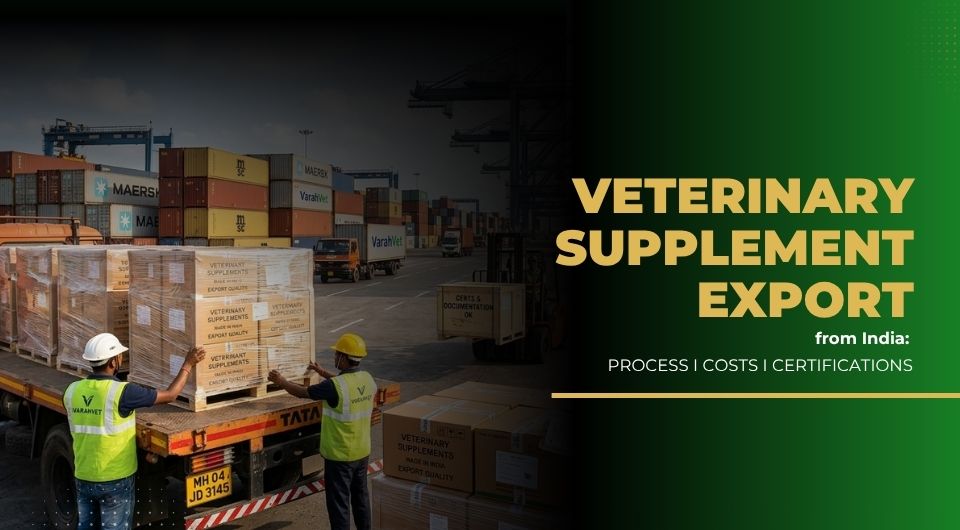
India has become one of the largest markets for animal healthcare products, veterinary feed supplements and livestock nutrition products. The world demand for high quality veterinary supplements produced in India is bountifully rising with the surging growth of the dairy farming, poultry farming, aquaculture and animal husbandry industry across the globe.
Indian veterinary manufacturers currently have products like calcium supplements; mineral mixtures; liver tonic; feed additives; probiotics; growth promoters; herbal veterinary products; and nutritional feed supplements exported to various countries such as Asia, Africa, Middle East, Latin America and other countries abroad.
India is a prime example of having a robust manufacturing base, low production cost, skilled labor force, and GMP approved veterinary manufacturing units, which is one of the reasons for this growth. Hence, a lot of businesspersons, exporters, distributors and veterinary business owners are currently looking for opportunities in the field of export of veterinary supplements from India.
But exports of vetfeed supplements are not just about product production and export. Exporters need to be aware of export rules and regulations, export certificates, export documentation, international quality standards, export labelling requirements, export logistical costs, and export compliance systems of countries.
This comprehensive guide provides you with all the information you need to know about the process of exporting veterinary exports from India, from certifications to export costs, documentation, regulatory approvals and some helpful tips for businesses looking to capitalize on international export opportunities in the veterinary field.
Understanding Veterinary Supplement Export Business
Veterinary export means the export of animal nutrition and healthcare products from India to foreign markets.
These products find use in:
- Dairy farming
- Poultry farming
- Goat farming
- Sheep farming
- Aquaculture
- Livestock management
- Pet nutrition
The veterinary export industry encompasses pharmaceuticals as well as non-pharmaceutical products based on product formulations and usage.
Types of Veterinary Supplements Exported from India
There are many types of veterinary feed supplements and animal nutrition products that are exported from India.
- Dairy Feed Supplements
These products can help increase:
- Milk production
- Calcium balance
- Reproductive health
- Digestion
- Immunity
Popular products include:
- Calcium liquid supplements
- Mineral mixtures
- Protein supplements
- Rumen stimulants
Poultry Feed Supplements
There are many countries that export poultry supplements including:
- Broiler growth
- Layer productivity
- Immunity support
- Gut health
- Feed conversion improvement
The typical poultry export products are:
- Electrolytes
- Liver tonics
- Probiotics
- Vitamin premixes
- Growth promoters
Herbal Veterinary Products
Herbal veterinary supplements are becoming more popular worldwide, as people are seeking natural ways to treat their pets.
Common herbs exported are:
- Herbal liver tonics
- Herbal digestive supplements
- Herbal immunity boosters
- Herbal stress relievers
Why India Is a Major Hub for Veterinary Supplement Export
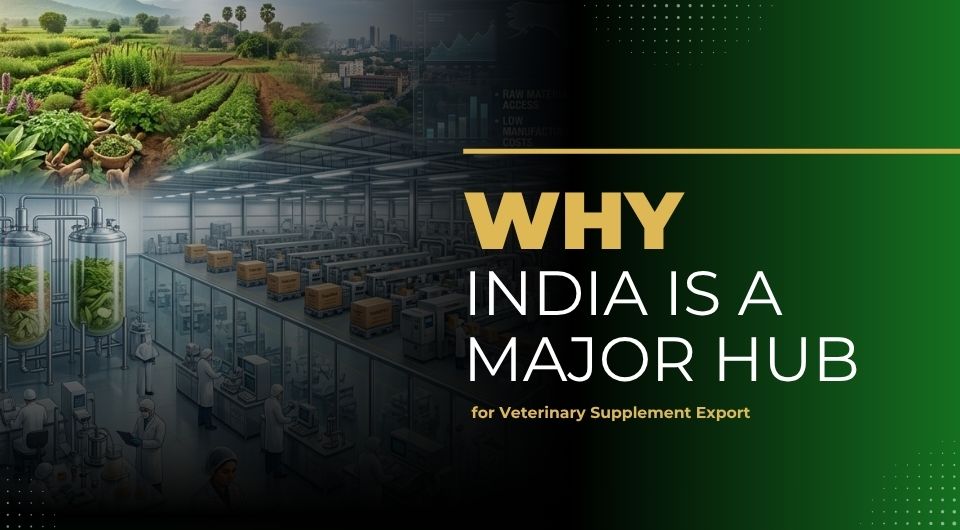
There are several benefits of veterinary manufacturing and export in India.
- Cost-Effective Manufacturing
Indian manufacturers can make veterinary supplements at relatively cheaper price yet with a satisfactory quality standard.
- Strong Manufacturing Infrastructure
India has a large number of:
- GMP-certified plants
- Veterinary formulation units
- Nutraceutical manufacturing facilities
- Feed supplement production companies
- Availability of Raw Materials
India has easy access to:
- Herbal ingredients
- Minerals
- Nutritional compounds
- Veterinary feed ingredients
- Skilled Workforce
Indian veterinary and pharmaceutical industries have a lot of experienced people who are engaged in product development and quality control.
Step-by-Step Process for Veterinary Supplement Export from India
Step 1: Confirm the product category.
The first thing to do is to determine what kind of a veterinary product you are going to export.
This may include:
- Feed supplements
- Nutraceuticals
- Veterinary medicines
- Feed additives
- Herbal veterinary products
Import restrictions may vary from country to country for each category.
Step 2: Register Your Export Business
Businesses need to register certain key things before embarking on exports.
Company Registration
You can operate as:
- Proprietorship
- Partnership
- LLP
- Private Limited Company
GST Registration
GST registration is compulsory for exports.
Import Export Code (IEC)
IEC is one of the most essential requirements of Indian exporters.
It is an order of the Directorate General of Foreign Trade (DGFT) which is essential for international trade.
IEC is a must otherwise export activities cannot go ahead legally.
Step 3: Select a trusted veterinary manufacturer.
The selection of the correct manufacturer is very important to ensure success with exports.
Today, there are experienced third-party manufacturers who most exporters prefer to deal with because they offer the following:
- GMP-certified production
- Bulk manufacturing
- Product customization
- Private labeling
- Export documentation support
- Packaging solutions
International quality compliance can also be guaranteed by reliable manufacturers.
The significance of GMP Certification for Veterinary Export.
Good Manufacturing Practices are referred to as “GMP”.
Strict quality control systems are maintained on the production lines in GMP certified facilities.
International buyers would like to buy from GMP certified manufacturer since GMP certification gives assurance as follows:
- Product consistency
- Manufacturing hygiene
- Quality assurance
- Safety compliance
- Professional production standards
GMP is deemed as a requirement for many international markets.
Step 4: Product Formulation and Documentation
Businesses need to complete the following before exporting products to other countries:
- Product formulations
- Ingredients
- Nutritional composition
- Product specifications
- Usage instructions
- Product claims
Misstatements or overstatements could cause compliance problems in international markets.
Step 5: The process of product testing and quality assurance follows.
It is very crucial that export businesses conduct quality testing.
Veterinary supplements can be tested for:
- Nutritional accuracy
- Heavy metals
- Microbial contamination
- Stability
- Shelf life
- Purity standards
Laboratory Reports are requested by many importing countries prior to acceptance.
A few of the significant certifications required for the veterinary supplement export.
Each country has a different regulatory framework, with a number of certifications usually necessary.
- GMP Certification
One of the most significant certifications in the veterinary manufacturing industry.
It shows good manufacturing practices and quality control processes.
- ISO Certification
ISO certificates enhance international trust and working practices.
These are some of the most popular certifications to consider:
ISO 9001
ISO 22000
- Certificate of Analysis (COA)
COA confirms the quality of the product and composition of the ingredients.
COAs are commonly asked for by international buyers of imported veterinary products.
- Free Sale Certificate
This certificate is a legal requirement that the product is being sold in India.
This is often a requirement for importation in many countries.
- Health Certificates or Phytosanitary Certificates
Depending on the type of product, animal health or phytosanitary documentation may be requested by certain countries.
- MSDS (Material Safety Data Sheet)
MSDS documents include information on:
- Product handling
- Safety measures
- Ingredient safety
- Storage instructions
- Quickly pack and label the product.
Packaging is one of the major factors in the exports of veterinary products.
Export packaging should focus on:
- Product protection
- Regulatory compliance
- International labeling standards
- Brand presentation
Labels usually include:
- Product name
- Composition
- Batch number
- Manufacturing date
- Expiry date
- Storage instructions
- Dosage guidelines
- Country of origin
There are countries that also need labels in their local languages.
Export Documentation
One of the most crucial steps in conducting a business overseas is the handling of export documentation.
Typical export paperwork includes:
Commercial Invoice
Provides information on transactions and prices.
Packing List
Gives information on how to package a shipment.
Bill of Lading or Airway Bill
Provides evidence of the shipment.
Certificate of Origin
Declares that the products were made in India.
Export Declaration Documents
Compliance to customs clearance.
Good documentation minimises delays and customs problems.
Total export cost for veterinary supplements in India
There are various factors influencing the export costs.
Manufacturing Costs
This includes:
- Raw materials
- Packaging
- Formulation costs
- Labor
- Quality testing
Certification Costs
Costs that businesses should invest in:
- GMP certification
- ISO certification
- Product testing
- Export approvals
Logistics and Shipping Costs
Shipping rates will vary on:
- Shipment size
- Destination country
- Transportation method
- Packaging weight
Air shipment is quicker than sea shipment, but is also more expensive.
Customs and Duties
Import duties and taxes are different for veterinary products in different countries.
It is very crucial to be familiar with the laws in the country to which you are moving.
Registration of the Products in foreign countries.
Veterinary products need to be registered prior to approval in some countries.
Registration fees might contain:
- Documentation charges
- Local agent fees
- Product testing
- Regulatory approvals
The major export markets for Indian Veterinary Supplements are:
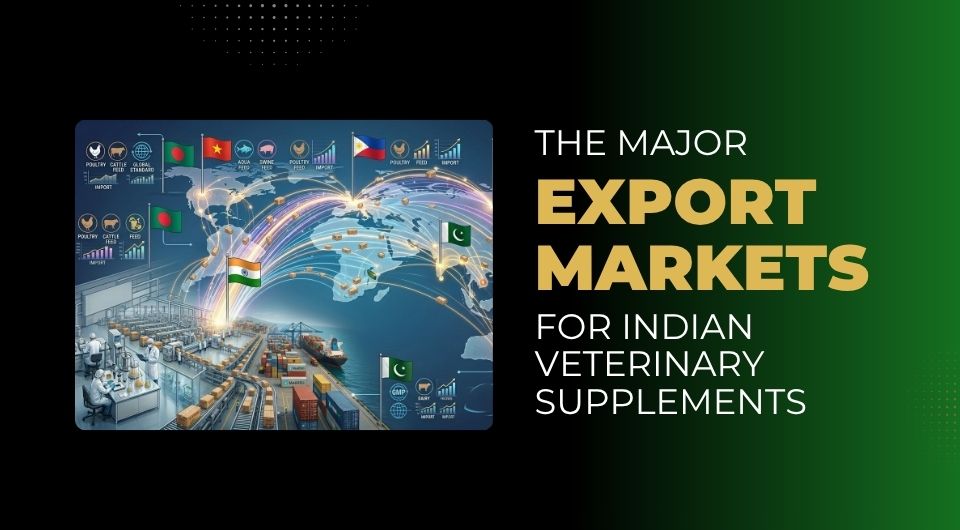
Veterinary products are exported to numerous markets worldwide from India.
Some popular export markets are:
- Bangladesh
- Nepal
- Sri Lanka
- Vietnam
- Nigeria
- Kenya
- UAE
- Saudi Arabia
- Tanzania
- Egypt
Demand is very high in developing agricultural economies.
The common challenges that are encountered in the export of veterinary supplements.
- Regulatory Differences
Veterinary import laws and product standards vary from country to country.
- Labeling Compliance
Labels can be rejected by the customs house if they are not correct.
- Quality Consistency
Foreign customers are looking for uniformity in products shipped each time.
- Logistics Delays
Product delivery could be impacted by shipping disruption.
- Payment Risks
Sometimes, it takes time to get paid for international business transactions and there are risks involved with money.
Third-party manufacturing offers a range of advantages for export businesses.
Third party manufacturing is very beneficial to exporters.
Advantages include:
- Lower infrastructure investment
- Faster market entry
- Professional formulations
- Export-ready manufacturing
- Better scalability
- Regulatory support
- Bulk production capacity
This model suits veterinary entrepreneurs, distributors, and startups, who are going to create export brands.
How important is it to invest in exporting your products to veterinarians?
A good brand can make your business identifiable in the international market.
The following are part of a good veterinary branding:
- Professional packaging
- Product consistency
- Informative labels
- Educational marketing
- Digital presence
Professional and trustworthy-looking brands are favored by international buyers.
Conclusion
Exports of veterinary supplements from India provide an immense opportunity for manufacturers, entrepreneurs, distributors and veterinary businesses. As the global demand for animal nutrition products is increasing, Indian veterinary product manufacturers are gaining greater footing in the international markets as they are able to produce at low costs and possess a robust manufacturing infrastructure.
But exporting is more than just about manufacturing products. Certifications, export paperwork, regulatory approvals, packaging standards, quality control systems, and international market criteria are all concepts that businesses need to grasp.
Working with trusted GMP certified third party veterinary manufacturers can make exporting easier and more predictable, and help maintain product quality and compliance. Companies that are transparent, quality oriented, document driven and have a long-term orientation in international veterinary markets are more likely to succeed.
As the world’s livestock and poultry industry continues to grow, the Indian exporters of veterinary supplements have excellent opportunities to establish a strong global brand and tap into new international markets.
Frequently asked questions (FAQs).
- Is export of veterinary supplement from India subject to IEC?
Yes. Every export business in India must have an IEC (Import Export Code).
- Is export of veterinary feed supplements covered by GMP certification?
GMP Certification enhances trust and quality assurance which is preferred by many international buyers when it comes to manufacturers.
- What are the countries of veterinary supplement import from India?
Products of Indian Veterinary are exported to various regions of Asia, Africa, Middle East etc. countries.
- Is third party manufacturing an option for startup export of veterinary products?
Yes. Third party manufacturing is a popular choice among many startups for bringing their veterinary brand to market without investing in manufacturing.
- What are the major expenses associated with veterinary exports?
The manufacturing, certification, product testing, packaging, shipping, customs duty and documentation cost are big ones.
If you’re thinking about starting the export of veterinary supplements, pay attention to quality production right from the start, regulatory compliance, professional brands and export-ready certificates. Trust is established by implementing GMP certified production systems and maintaining homogenous product quality in veterinary export business from India can be successful.