
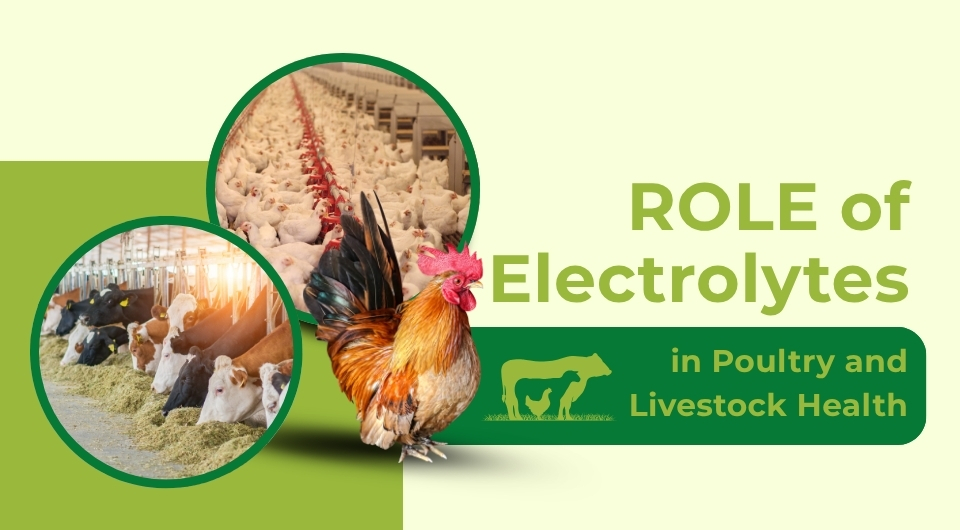
It is a condition that every poultry farmer, dairy farmer or cattle farmer has at some point experienced – a flock of chickens under heat stress; a herd of calves scouring in disease; and broilers displaying sudden lethargy, with no apparent clinical signs. Many of these cases are not due to a pathogen or a traditional nutrition deficiency. It is due to electrolyte imbalance.
One of the most important but often overlooked aspects of animal health management is electrolytes. These ionized minerals, chiefly sodium, potassium, chloride, calcium, magnesium, and bicarbonate, control all the movements of body fluids, they help nerve impulses, power body movements, regulate the acid-base balance and maintain the environment within the cells that all metabolic processes require.
The effects of electrolyte imbalance on production performance and animal welfare are rapid and severe when caused by heat stress, diarrhoea, respiratory diseases, rapid production growth or inadequate water intake. Egg production drops. Milk yield declines. Feed conversion deteriorates. With severe cases, it increases in death rate.
This article delves into the science behind electrolytes in poultry and livestock health, the typical conditions that upset electrolyte balance, the function and importance of each of the major electrolytes, and how farm owners and veterinary professionals can apply electrolyte supplementation effectively to help optimise performance and animal welfare.
1. What are Electrolytes and why do animals need them?
Electrolytes are minerals which, when dissolved in water, have an electrical charge. It is this charge that enables them to transmit signals across cell membranes, maintain osmotic gradients between fluid compartments and regulate the flow of water in and out of cells.
The three main fluid compartments of livestock and poultry where electrolytes are found are:
plasma (intravascular fluid), extracellular fluid (around cells) and intracellular fluid (within cells). This balance of these compartments, mainly controlled by sodium, potassium and chloride, is crucial in normal physiology.
There are 6 main electrolytes in animal nutrition and health management:
- Sodium (Na+): The main positive ion (cation) in the extracellular fluid, essential for maintaining blood pressure, nerve transmission and absorption of nutrients in the gut.
- Potassium (K+): The main cation of the intracellular fluid compartment, important for muscle function, cardiac rhythm and acid-base regulation.
- Chloride (Cl-): The main anion (negatively charged ion) of the extracellular fluid, balances Na and participates in acid-base regulation and acid production in the stomach.
- Calcium (Ca2+): To be used in muscle contraction, blood clotting, nerve function, eggshell formation and bone mineralisation.
- Magnesium (Mg2+): Cofactor in more than 300 enzymatic reactions, important in energy metabolism, muscle relaxation and utilisation of calcium.
- Bicarbonate (HCO3-): The most important buffer against acidosis, maintaining the pH of blood within the narrow range necessary for cellular function.
The basic minerals are essential for the diet, but it is the interplay between these electrolytes, especially the dietary electrolyte balance (dEB) — which equals the milliequivalents of sodium and potassium available per kilogram of diet minus the milliequivalents of chlorine available per kilogram of diet — that has the greatest direct effect on animal performance.
2. The Dietary Electrolyte Balance (dEB): The Ratio is More Important than the Amount
The notion of dietary electrolyte balance (dEB) has revolutionized feed formulation in poultry science especially. The research always shows that optimum dEB in broiler diets (between 200 – 250mEq/kg) leads to better growth rate, feed conversion ratio, bone mineralisation and carcass quality.
If it is too low (less than 150 mEq/kg) the body will move towards metabolic acidosis as a result of a high chloride to sodium and potassium ratio in the diet. This decreases the efficiency of protein synthesis, weakens the immune system and hampers bone development. On the other hand, too much of a dEB can lead to alkalosis and have its own performance impact.
The use of anionic salts (especially during the transition cow stage) has been a key aspect of acid-base balance management in dairy and beef cattle to prevent milk fever (hypocalcaemia). Pre-calving feeding of anionic diets helps to prevent this expensive, and welfare-reducing metabolic disorder by primed the cow’s physiological mechanisms of calcium mobilisation prior to the demand at calving.
So, while dEB is a scientific concept, it’s a concept that has real application in making decisions about how to formulate a dairy product that will benefit the profitability of every dairy operation and every poultry business.
3. Heat Stress: The Largest Indication for Electrolyte Supplementation in Tropical Agriculture.
Heat stress is the most economically important electrolyte disruptor for farm owners around the world in India, Southeast Asia, Middle East and sub-Saharan Africa.
If the temperature of the environment is above 28-30°C for broilers and laying hens, above 25°C for dairy cattle, the “heat stress” triggers a physiological cooling mechanism. In poultry it is mainly characterised by panting (polypnoea). In cattle, it is an increase in breathing rate and sweating.
These both have major consequences for electrolyte:
- Poultry with panting lose excessive amounts of CO2, thus lowering the blood carbonic acid levels and increasing blood pH level — this is called respiratory alkalosis. This hinders the availability of calcium and impairs quality of eggshells in layers, appetite and growth in broilers and immune function in both species.
- Sweating in cattle results in losses of sodium, potassium and chloride from the skin, which decreases circulating electrolyte levels and water intake drive — thereby exacerbating dehydration.
- The two species decrease their feed consumption during heat stress, and therefore the intake of electrolytes is reduced when the need for them is increased.
During a heat stress event, drinking water is the best and fastest of all electrolyte replacement measures. Correcting respiratory alkalosis in poultry by supplementing potassium chloride, sodium bicarbonate and ammonium chloride in calculated proportions and in cattle replacing sweat losses by supplementing potassium chloride, sodium bicarbonate and ammonium chloride in calculated proportions helps to maintain performance during peak summer months.
Our heat stress electrolyte products are formulated to provide the ideal sodium-potassium-bicarbonate ratio that will safeguard the performance of flocks and herds during the heat of the day and in tropical farming conditions.
4. Diarrhoea and Dehydration; Electrolyte Therapy as a life-saving intervention.
Diarrhoea (scours) is the major cause of death in neonatal calves, lambs and piglets worldwide. As the diarrhoea leads to a loss of electrolyte and water, the mechanism of death is not the presence of the pathogen (whether viral, bacterial or cryptosporidial) but the resulting electrolyte deficiency and dehydration.
The concurrent loss of sodium, chloride, potassium and bicarbonate is present in severe diarrhoea. This causes metabolic acidosis, which, along with hypovolaemia (low blood volume), slows down the central nervous system, weakens the heart and, if left untreated, will ultimately result in death within 24-72 hours in severe cases.
Oral rehydration therapy (ORT) using properly formulated electrolyte solution is the mainstay of treatment. The optimum oral electrolyte solution for calves should contain:
- To replace sodium or to help with glucose/sodium co-transport in the gut: Sodium (90-130 mmol/L).
- To aid sodium absorption through intestinal cotransporters, which do not seem to be affected by enteritis. (50-200 mmol/L)
- Alkalinising agents (bicarbonate, acetate or propionate): To reverse metabolic acidosis (the life-threatening part of severe scours).
- Potassium (10–30 mmol/L): To replace intracellular potassium losses.
Note that not all oral electrolyte products are the same in terms of the alkalinising effect. Products containing bicarbonate provide immediate buffering while those containing acetate or propionate provide more gradual alkalinisation as the acetate or propionate are metabolized. This will depend on the level of acidosis and the farm’s practical storage needs.
Electrolyte supplementation of poultry during outbreaks of disease, such as Newcastle disease, infectious bronchitis or bacterial enteritis, is helpful in maintaining hydration, reducing physiological stress, and aiding gut repair and recovery.
5. Calcium and Magnesium: The Rewarding and Underutilized Electrolytes in Production Animal Health
Although sodium, potassium, and chloride are the most important electrolytes in the discussion, calcium and magnesium have an irreplaceable function in the productivity of livestock and poultry and their deficiencies or excesses have some of the most significant economic consequences in commercial livestock and poultry operations.
Milk Fever in Dairy Cattle (hypocalcaemia)
Hypocalcaemia, which is displayed as milk fever around calving, is one of the most expensive metabolic disorders in commercial dairy farming. Calcium requirements peak at calving as the mammary gland starts to pump out colostrum and milk. The calcium mobilisation mechanisms are inadequate if the cow’s blood calcium drops precipitously, leading to progressive muscle weakness, recumbency, and ultimately death (if not treated).
Subclinical hypocalcaemia is even more important from a herd health point of view as the cow is not visibly recumbent but blood calcium is still low. It affects uterine contraction (inc. risk of retained placenta, metritis), immune function (inc. risk of mastitis) and decreases reproductive performance. In many dairy farms, it has been estimated that 25–50% of the dairy cows in their second or subsequent lactation are suffering from subclinical hypocalcaemia.
Pre-calving anionic salt supplementation, correct dietary calcium management in the transition period and oral bolus calcium supplementation for at-risk cows in the post-calving period.
Cattle and Sheep Hypomagnesaemia (Grass tetany)
Magnesium is not readily mobilised from bone stores when its dietary intake is too low compared to calcium. This can lead to a sudden onset of magnesium deficiency in the bloodstream, which is called grass tetany or hypomagnesaemia, and is fatal for cattle and sheep, grazing on lush spring pastures.
Symptoms develop quickly – nervousness, tremors of the muscles, convulsions and death. Considering the prevention via water, lick blocks or top dressing with magnesium on pasture is much more effective and cost effective than treatment (intravenous magnesium administration).
The role of calcium in the poultry: Eggshell quality and bone integrity.
Calcium is needed in remarkable amounts by laying hens, in fact, about 2 grams of calcium is in the shell of one hen’s egg. Hens source calcium from dietary sources and medullary bone for this purpose. When calcium isn’t sufficient, eggs will be thin-shelled, break more easily, hatchability will be decreased in the breeder and eventually the skeletal system will demineralize.
It is important to note that the size of calcium carbonate particles is important: large calcium carbonate particles (oyster shell) are stored in the gizzard and broken down overnight when eggshells are being calcified, whereas smaller calcium carbonate particles (limestone) are absorbed earlier and might not be available at the time when they are needed the most.

6. Electrolytes and Immune Function: The Relationship that Farmers Miss.
The effect of electrolyte balance on immune competence in poultry and livestock is far-reaching and direct and, often, overlooked in a consideration of disease management.
In poultry, during respiratory alkalosis due to heat stress, sodium bicarbonate has been found to restore normal blood pH and enhance the function of heterophils (avian equivalent of neutrophils). Deficiency of potassium causes impaired lymphocyte proliferation and antibody production. There are many immune signalling pathways that require the presence of magnesium.
Most importantly, the dehydration that occurs with electrolyte losses from heat stress, diarrhoea or disease, increases pro-inflammatory cytokines and decreases immune function through impaired lymphatic circulation, just at the time when it is most needed.
That’s why it is recommended to feed electrolytes to a horse before any heat stress or disease challenge occurs, instead of when performance is suffering.
7. Dosing, timing and electrolyte product selection.
Three main points need to be taken into consideration: appropriate formulation of the electrolyte for the condition; appropriate timing of electrolyte supplementation; and appropriate route of delivery.
For Heat Stress in Poultry
Start to offer electrolyte drinks through water when average daily temperatures are consistently above 30°C. Provide an electrolyte solution suitable for respiratory alkalosis correction, usually with potassium chloride, sodium bicarbonate and vitamin C (ascorbic acid, which is helpful in sustaining adrenal function during heat stress). Birds are most active in the early morning or early evening, when they are drinking, and supplementation is most effective at this time.
To manage diarrhoea in calves.
Start oral electrolyte treatment as soon as loose stool occurs (before the calf is depressed or recumbent). Continue on for 2-3 days or until faeces are normal. Choose a formulation that has a high alkalinising power (acetate or bicarbonate based) for calves that are depressed or weak. Continue milk feeding as long as possible with ORT — gut repair is impaired if milk is withdrawn.
For Transition Cow Management
Supplementation with anionic salts should be started 2–3 weeks prior to calving. Regularly check the pH of urine (should be 6.0–7.0) to ensure proper acidification. Supplement with a high dose of calcium orally within 2 hours of calving for high risk cows (older cows, previous milk fever history).
The selection of the appropriate electrolyte product.
Electrolyte products are not all created equally. Poults or livestock should be raised with a product considered for the following reasons:
- Does the formulation contain all important electrolytes needed for the particular condition?
- In cases of diarrhoea, does the product provide alkalinising capacity or does it merely provide fluid replacement?
- Poor taste makes products less palatable, which is a problem since they should increase it — the opposite of what is desired.
- The ease of administration in water lines without blockages: Products that can be completely and quickly dissolved.
- In addition to electrolyte replacement, quality electrolyte products include supporting nutrients such as vitamin C and B-complex vitamins, and glucose, which promote stress recovery and energy production.
8. Varah Vet’s Electrolyte Solutions: Formulated for Indian Farming Conditions
We recognize that electrolyte management in Indian livestock and poultry farms comes with its share of challenges — such as the heat of the summer, high disease loads and the need for scientifically sound and cost-effective solutions.
We manufacture our electrolyte products using veterinary nutritional science and the practicalities of tropical farming in our GMP certified manufacturing facility. Our formulations cover:
- Optimised heat stress electrolyte complexes for broilers, layers, and dairy cattle, with added vitamin C for balance and benefit
- Oral rehydration therapy (ORT) for scouring calves and lambs with good alkalinising capacity
- Incorporate products into transition cow rations that contain both anionic salts and calcium and magnesium components.
- For farms with mixed livestock species: Multi-species electrolyte powders for all poultry, cattle, goat and sheep — perfect for multiple species.
All products are supported by batch testing, full documentation and can be supplied for both domestic application and exported to international markets.
9. Knowledge of Electrolyte Management in Extreme Conditions: Lessons from Field Experience
In field experience with dairy farms and poultry units in India, it has been observed that certain practical recommendations for electrolyte management are not just what is prescribed in the books, but are practical observations from the field:
- Timing of electrolyte supplementation — supplementation prior to the onset of heat stress problem results in better production outcomes consistently, and the earlier the better in heat stress management.
- The effectiveness of the electrolyte: The electrolyte efficacy may vary considerably from the calculated dose due to water quality in drinking water, especially in areas of high total dissolved solids (TDS). Water quality testing is an essential first step in a water quality programme design.
- Electrolytes are NOT a diagnosis: Electrolyte therapy is lifesaving in diarrhoea and heat stress, but the cause of the illness should be determined and treated. If persistent diarrhoea, despite OR, is present, differential diagnosis and treatment aimed at the underlying cause is necessary.
- Consistency is more important than intensity: A consistent electrolyte supplementation programme during the hot months is better than high dose, sporadic interventions. Don’t add electrolytes to your emergency response plan, add them to your normal summer management plan.
10. The Nutrition for Sportsmanship Case for Electrolyte Supplementation
Return on investment from electrolyte supplementation is one of the most easily proven in animal health management for the dairy farm and poultry operators. Consider the following:
- The potential gains in adding 5% to egg production in a 10,000-bird layer flock at today’s market prices are substantial and far more than the cost of a well-designed electrolyte supplementation programme.
- Veterinary treatments, lost milk production during recumbency, risk of secondary disease and death incidence is avoided with a single case of clinical milk fever prevented in a high producing dairy cow by pre-calving anionic salt supplementation.
- Multiple field studies have demonstrated that a 50% reduction in calf mortality due to scours can be generated in just one season for greater than 10:1 return on investment by providing timely oral rehydration therapy.
Electrolyte supplementation is not just a line item on the luxury list for the farm health budget, it’s one of the best returns on investment for the livestock and poultry producer.
In conclusion, electrolytes form the backbone of animal health and wellbeing.
Electrolytes are not just a source of rehydration for poultry and livestock health. These are the minerals that control the physiology of every major body system, including nerve transmission, muscle function, immunity, acid-base balance and reproductive performance.
Electrolyte management is a critical component of animal health and productivity, for dairy farm owners looking to maximise health and minimize disease in transition cows, poultry producers aiming to enhance the performance of their flocks during warm weather, as well as cattle producers seeking to keep calves disease free and prevent fatal diarrhoea this summer and veterinary practice working to create a comprehensive herd health programme.
Varah Vet will provide the farm owners and veterinarians with the electrolyte solutions, nutritional knowledge and product quality expected in modern livestock and poultry farming. Look at our product range and have a discussion with our animal health team to develop an electrolyte management programme to suit your farm.
Frequently Asked Questions (FAQs)
Q1. When should I begin to give electrolytes to poultry in the summer?
A: Start electrolyte supplementation by using drinking water when the day time highs are routinely above 30°C or early signs of heat stress are noticed (e.g. animals panting, feed intake decreasing, animals gathering around water drinkers). Proactive supplementation prior to peak summer heat conditions is more effective than reactive supplementation when production has tailed off.
Q2. May use the same electrolyte product for cattle and poultry?
A: There are some broad spectrum electrolyte formulations suitable for use in multiple species. Species specific formulations are preferred, however, for best effect: for targeted conditions such as that of correcting respiratory alkalosis in poultry (bicarbonate emphasis) or metabolic acidosis in scouring calves (strong alkalinising capacity). Always refer to product labels and follow the veterinarians instructions for species-specific dosing.
Q3. For how many days should I feed electrolyte to a scouring calf?
A: Oral electrolyte therapy should be continued for 2-3 days after diarrhoea has started or until faecal consistency is normal and the calf is bright, alert and eating normally. Oral fluids are not enough in moderate to severe dehydration and intravenous fluids may be needed in addition. Always call the vet if the calf is depressed, unable to stand or unable to suckle.
Q4. Dietary electrolyte balance (dEB): what is it and why is it important for the performance of broilers?
A: Dietary electrolyte balance (dEB) is the milliequivalents difference between the sodium plus potassium content in the feed and the chloride content, per kilogram of feed. It has been proven that an optimum dEB level for broiler growth, feed conversion, skeletal development and immune function is between 200-250 mEq/kg. When dEB is below this range, the body is in metabolic acidosis, which is usually a result of too much chloride, reducing performance in protein production.
Q5. Are there potential egg quality issues associated with electrolyte imbalances in layers?
A: Yes. Thin shell and soft shell eggs in laying hens are one of the main symptoms of respiratory alkalosis, which occurs during periods of heat stress. Panting leads to hyperventilation (exhalation of CO2) and activates the respiratory compensation system which leads to increased blood pH, which in turn lowers the level of carbonic acid available for eggshell calcification. Heat-stressed flocks have alkalosis which is corrected by potassium bicarbonate or sodium bicarbonate supplementation, and normal eggshell formation is restored.
Q6. What electrolyte supplements can I obtain from Varah Vet that can be used on my farm?
A: We have a distribution network of authorised vendors for our Varah Vet product range in India and also our export programme for foreign customers. You can browse our product catalogue or speak to our animal health team directly and ask about your needs on your farm and get an order.
Science-backed electrolyte solutions from Varah Vet can enhance your flock and herd performance.Varah Vet electrolyte solutions are backed by science and can help improve your flock and herd performance.
Produced in our GMP certified plant and recommended by the dairy farmers, poultry farmers and veterinarians all over India and the world. Discover our range of electrolytes and talk to our animal health team today.