
Shrimp is considered as one of the most rapidly developing industries in the world of aquaculture. Shrimp has become one of the most valuable products from the ponds of the coast of Andhra Pradesh and Gujarat in India to the export-oriented farms in Vietnam, Thailand, and Ecuador, and has attracted a tremendous amount of investment in aquaculture infrastructure. Despite all these possibilities, shrimp farming is still one of the most technically complex livestock production systems.
Shrimp are also very sensitive to changes in water quality, disease and nutritional imbalances, unlike poultry or dairy cattle. If pond water quality is poor for a week, a whole crop can be lost. For this reason, aquaculture supplements are no longer a luxury, but a necessity for serious shrimp farmers.
This comprehensive guide from Varahvet includes all of the information you need regarding aquaculture supplements for shrimp farming; shrimp nutritional requirements during each growing phase, how various classes of aquaculture supplements work, the factors to consider when selecting a shrimp farming aquaculture supplement manufacturer or supplier, and how to incorporate shrimp farming aquaculture supplements into a successful farm management program. This guide is for everyone from a new shrimp farmer to an experienced shrimp producer who wants to optimize production.
1. Aquaculture supplements play a pivotal role in the cultivation of shrimp.
Both intensive and semi-intensive shrimp farming systems are very stressful for the animals nutritionally and physiologically. Artificial feed inputs, enclosed pond environments and stocking densities that are unnatural can lead to high rates of development of nutritional deficiencies, stress responses and disease pressure.
Aquaculture supplements are used to give shrimp the extra nutrients they require to thrive, grow efficiently and withstand disease, when they are receiving standard commercial feed. They are not the answer for poor feed quality or poor pond management, but a valuable management tool that can significantly enhance survival, feed conversion ratios and harvest weights when applied properly.
The main function of shrimp farming supplements are:
- Addressing any deficiencies of micronutrients that a standard feed may not cover.
- Supporting immune system to decrease mortality related to bacterial and viral disease
- Improved feed digestibility and gut health for improved growth and feed conversion
- Minimizing the stress responses to stocking, water quality and disease challenges
- Ensuring healthy moulting cycles directly impacting growth rate
- Applying best practices for water quality and the presence of beneficial bacteria in pond water.
2. Knowledge of the nutritional requirements of shrimp.
It is important to know the minimum nutrient needs of the shrimp species to be cultured before choosing any specific supplement. Litopenaeus vannamei (Pacific white leg shrimp) and Penaeus monodon (black tiger prawn) are the two most commercially important species in the world. Both have defined and documented nutritional profiles.
The farmed shrimp’s basic nutritional requirements are:
Protein: Shrimp need 30-40 percent (balanced AA) protein in the feed. The essential amino acids such as methionine, lysine and arginine should be available in sufficient amounts. Deficiencies result in inhibition of growth, sub-standard moult and susceptibility to diseases.
Lipids and Fatty Acids: Highly unsaturated fatty acids, especially EPA and DHA, are essential for membrane integrity, reproductive function and stress resistance. They are frequently included in commercial fish feeds, but may be lacking in low cost or plant based feeds.
Vitamins: Vitamins C, E, and B-complex vitamins are known to have roles in immune function, antioxidant protection, and metabolic health. A special point to note is that crustaceans, including shrimp, cannot produce vitamin C endogenously and must rely on food sources for vitamin C.
Minerals: Moulting, enzyme function, and skeletal integrity require calcium, phosphorus, magnesium, potassium and trace minerals (Zn, Cu, Se, and Mn). Soft-shell syndrome and poor moulting results are often due to imbalanced mineral nutrition.
Probiotics and Prebiotics: Good bacteria and their food boost healthy gut flora, promoting better digestion and less growth of bad bacteria. Bacillus spp. are the most frequently used probiotics in shrimp aquaculture.
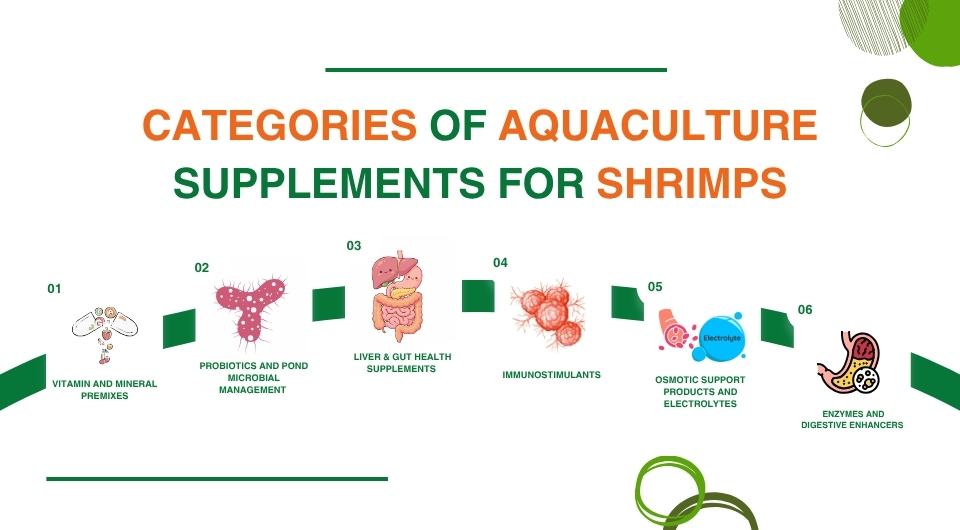
3. Categories of Aquaculture Supplements for Shrimps
There are many different categories of aquaculture supplements available. Knowing their functions and when to utilize them, will make you better informed as to purchasing and application decisions.
3.1 Vitamin and Mineral Premixes
Shrimp farming supplements that are widely used are vitamin and mineral premixes. Most are added to feed or dissolved in water and then spread over the surface of the pond or fed through feeding trays. The ideal vitamin premix for shrimp should include ascorbyl phosphate (vitamin C), stabilized vitamin A, vitamin D, vitamin E, and a complete B-complex vitamin mixture, plus fat soluble vitamins A, D, E and K.
Mineral premixes should contain macro minerals in forms which are readily absorbed by the animals with chelated trace minerals as well. Chelated minerals are usually more bio-available than inorganic mineral salts because they are bound to the carrier molecule (amino acid or organic acid) and are effective at lower inclusion rates.
3.2 The role of probiotics and pond microbial management products.
There are two different kinds of use of probiotics in shrimp culture. Gut probiotics are introduced into the feed or directly into the feeding trays to build up a beneficial bacteria population in the shrimp gut, which helps to optimize feed utilisation and pathogen reduction in the gut. Pond probiotics are spread over the pond water and pond bottom where they help to improve water quality by breaking down organic matter, reduce ammonia and nitrite build up and reduce the growth of pond pathogens.
Shrimp aquaculture probiotics include different types of bacteria, such as Bacillus subtilis, Bacillus licheniformis, Lactobacillus species, and Saccharomyces cerevisiae (yeast), as well as Nitrosomonas species for nitrification. Products that contain more than one strain can be more effective than products containing a single strain.
3.3 Liver & Gut Health Supplements:
The hepatopancreas is the most important digestive, absorptive and detoxicating organ in the shrimp (also known as the “liver”). It’s also the first organ to exhibit disease, nutritional stress or toxic exposure. The hepatopancreatic supplements generally consist of herbal extracts, phospholipids, organic acids and antioxidants that help to guard hepatopancreatic tissue, enhance digestive enzyme secretion and assist in detoxification activity.
Shrimp hepatopancreatic health products that contain extracts of milk thistle (silymarin), Phyllanthus niruri, betaine and choline are commonly used. All of these ingredients are important for protecting the liver tissue from oxidative damage and promote fat metabolism, an essential requirement when supplying energy under stress and moulting.
3.4 Immunostimulants
Unlike mammals, the shrimp do not have adaptive immunity. Their defense against pathogens is entirely through the innate immune mechanisms such as haematocyte activity, phenoloxidase cascades and antimicrobial peptides. Immunostimulant supplements would improve these innate immune pathways and make shrimp more resilient to bacterial disease like Vibrio and AHPND, acute hepatopancreatic necrosis disease; and viral diseases like white spot syndrome virus (WSSV) and infectious myonecrosis virus (IMNV).
Immunostimulants that are commonly used are yeast cell wall beta-glucans, therapeutic doses of vitamin C, astaxanthin (a carotenoid with strong antioxidant activity), nucleotides and different herbal extracts such as turmeric, neem and ashwagandha. Beta-glucans are one of the most well-studied immunostimulants used in aquaculture and have shown to be effective in boosting survival rates in disease challenge conditions.
3.5 Osmotic Support Products and Electrolytes
Shrimp shed their old hard shell and develop a new, larger shell as a result of moulting. Shrimp are very susceptible to predation, mechanical damage and osmotic stress when they are moulting and immediately after moulting. Electrolyte solutions with sodium, potassium, chloride, magnesium and calcium provide assistance for the osmotic regulation process, a reduction in the moulting physiological stress and an increase in hardening of the new shell.
They are especially useful when moulting is heavy as in periods of intensive growth or in ponds where the salinity or mineral content of the water is low or variable.
3.6 Enzymes and Digestive Enhancers
The use of enzyme supplements in shrimp feed helps to aid the digestion and absorption of nutrients that are not readily absorbed into the body. The use of the phytase enzyme in plant-based feed ingredients can increase the availability of phosphorus, which will lead to less phosphorus being leaked into pond water. Higher digestibility of protein (due to higher protease enzyme activity) and fats (due to higher lipase enzyme activity) reduces the feed conversion ratios and also enhances growth rates.
4. Stage-Wise Supplement Application in the Shrimp Production Cycle.
The use of supplements in shrimp farming isn’t merely a matter of using the same products at the same rate over the entire farming operation. Nutritional requirements and stress for different life stages and production phases differ.
4.1 Nursery Phase (Post-larvae to 0.5 gram)
The emphasis in the nursery should be on establishing gut health, immunity and optimal nutrition for early growth. The best time for starting probiotics is early to establish beneficial bacteria in the gut. Vitamin and mineral premixes are required to make up for deficiencies in larval feeds. Moderate dosage of immunostimulants is used for establishing basal disease resistance prior to stocking in grow-out ponds.
4.2 Early Grow Out Phase (0.5 to 5 grams)
It is a time of fast growth and greatest amount of nutrition per pound of body weight. As feed consumption increases very quickly, fatty supplements for the support of the digestive organs, hepatopancreatic support supplements may be added. This is when frequent moulting takes place, and electrolyte supplements are used to aid this. Regular applications of pond probiotics are recommended to keep the water quality high due to accumulation of organic wastes with increase in feed inputs.
4.3 Mid to Late Grow-Out Phase (5 grams to harvest)
The more the shrimp grow, the more attention needs to be paid to keeping the shrimp healthy, optimising feed conversion, and controlling the total stress of high shrimp densities and large amounts of waste in pond bottoms. The late grow-out phase is especially critical with regard to disease pressure and immune stimulants are especially important at this stage. High doses of vitamin C supplements help defend against oxidative stress and boost immunity during stress. During this phase, enzyme supplements can help increase the efficiency of the feed and lower operating costs.
5. How to conduct a trial to determine the best aquaculture supplement.
The aquaculture supplement market in India and worldwide has a diversified product landscape with products of varying quality. Not every product is made the same, and not every claim made in the marketing of the product is backed by independent research. Follow this process when looking at a supplement before buying it.
There are a number of key criteria to evaluate supplements:
- Labeling: All active ingredients and concentrations must be provided on the product label or its technical data sheet. Steer clear of products that don’t specify the amount of the specific blends in their formulations.
- Manufacturing standards: Select supplements that are made in a GMP-certified, ISO-certified facility. These certifications ensure uniformity of quality from batch to batch.
- Active ingredients: Vitamin C, probiotics and enzymes break down quickly if not stabilised. Ensure that the product contains these ingredients in stabilised or encapsulated formats, e.g., ascorbyl phosphate for Vitamin C, or bacteria that have been microencapsulated for probiotics.
- Expiry dates and storage conditions: products should be clearly labelled with expiry dates and storage instructions. In the case of probiotics and enzyme products, in particular, the shelf life is short after opening.
- Technical support and dosage guidance: A good supplier will be able to give species-specific and stage-specific dosage recommendations and not only a generic application rate.
- Trial data or field evidence: Request trial data, field cases or references from farms that have used the product from your supplier. Successful manufacturers have proven performance data.
6. Common Mistakes to avoid when using Aquaculture Supplements
The best supplements won’t work well if taken the wrong way. Those are the most frequent errors shrimp farmers commit in regard to supplementation programmes.
- Overdosing because more is better: Too much of some vitamins (such as fat soluble vitamins) and minerals can lead to toxicity and make the shrimp unhealthier.
- Inconsistent application: Supplementation is only effective if applied at the correct time during the production cycle and consistently. However, occasional supplementation during disease outbreaks is not as effective as regular disease prevention.
- Not addressing pond water quality as a foundation: Water quality can’t be made up for with supplements. The dissolved oxygen, ammonia, nitrite and pH of the water should be in acceptable range to utilize the benefits of supplements.
- Mixing incompatible products: Certain combinations of supplements can lower the effectiveness of the other supplement or cause a negative reaction. When more than one product is used at the same time, always ask advice from your supplier.
- Poor feed binding and application: Water soluble supplements that are applied to the feed in ponds should be bound to the feed with the right binder and applied on feeding trays instead of broadcasted in the open water so that the shrimp actually eat it.
Conclusion
In today’s competitive shrimp production system, aquaculture supplements are no longer a choice for the shrimp farmer. The trend is clear: farms that implement systematic and science-based supplementation programmes on a regular basis beat those that wait for outbreaks to happen and then try to react.
Successful supplementation is not about the cost of products, but cost-effective ones. The nutritional requirements of different species at various growth stages, the nutrient content in the shrimp, the stresses of your pond, and the quality of the manufacturers you are purchasing from will determine the return you get from your shrimp feed or supplementation programme, or if you are pumping up your costs.
Varahvet manufactures a complete line of aquaculture and livestock health supplements in its Uttar Pradesh (UP), India facility, which is GMP, ISO certified. We collaborate with shrimp producers, aquaculture suppliers and private label suppliers from within and outside the country to create customized supplement programmes based on the shrimp production system and species.
Visit our aquaculture supplement range and private label manufacturing services at www.varahvet.com or reach out to discuss your enquiry.
Frequently asked questions (FAQs):
Q1. What are the most important supplements for Litopenaeus vannamei (white leg shrimp) farming?
A: The most important supplements for vannamei are Vitamin C (antioxidant and immune support), probiotics (gut health and pond health), hepatopancreatic support products (liver protection from AHPND and oxidative stress), and electrolytes (moulting time). Intensive vannamei systems are also commonly treated against diseases with beta-glucan immunostimulants.
Q2. May I use the same supplements for my shrimp as I do in my poultry or cattle?
A: Generally no. Although some ingredient categories are similar, the nutritional needs and metabolisms differ significantly between shrimp and terrestrial livestock, and the use and value of these foods produced and utilized in aquaculture is different. Use aquaculture-specific supplements (formulated and tested for aquatic species). Supplements for aquatic birds and cattle may result in water quality decline and can be of no nutritional value to shrimp.
Q3. What are the methods for the application of liquid supplements in shrimp ponds?
A: Liquid supplements can be used in a variety of different ways, depending on the type of supplement. Pond probiotics and water quality products are usually broadcasted onto the surface water in a pond (using a motorised sprayer or applied to the water inlet) while in pond water. The feed-based supplements are then coated onto the pellets with a feed binder (e.g. fish oil or soybean oil) and then left to cure and then fed on feeding trays to monitor consumption.
Q4. How many times should I feed my shrimp pond with probiotics?
A: Use the product according to pond conditions, stocking rate, and the product. Generally, pond probiotics are administered as a maintenance dose on a weekly or fortnightly basis, depending on the level of organic loading, water quality or disease pressure. The application of gut probiotics as a feed additive is usually used during the grow out phase, 1 to every other day.
Q5. Is there scientific evidence to support using herbals for shrimp?
A: Some herbal extracts have proven to be effective in shrimp health management, such as immune support and hepatopancreatic protection. There is also supporting research data for the use of turmeric (curcumin), Phyllanthus niruri, neem and ashwagandha in aquaculture settings. The effectiveness of these will, however, vary with the quality of the product, the inclusion rate and the method of application. Opt for herbal supplement products that can support stability and efficacy data from manufacturers.