
How many different categories of fish feed supplements are there? How many different amino acids? How many different probiotics? How many different vitamins? How many different enzymes? How many different herbal additives? How many different supplements are there in total? That’s a daunting prospect when you consider that each of these is considered essential for your fish. In reality, fish do have nutritious requirements that are quite complex and no category of supplements would meet all of their needs. Knowing what supplements fish need and which categories fill which needs is the key to developing a successful nutrition program, and to not wasting money on products that won’t make a difference.
This guide discusses the nutritional requirements of fish, the categories of supplements that meet those needs and how to approach the development of a feed supplementation program appropriate for the species and system.
It is important to know what type of food is essential for the fish.
The main nutrients that fish need are the same as other farmed animals – protein, energy, vitamins and minerals – but the requirements of fish vary significantly from the requirements of livestock, and the efficiency of fish in processing various nutrient sources is significantly different. Fish typically convert protein to body mass more efficiently than terrestrial animals, but also are more sensitive to the imbalance of specific amino acids and some of the deficiencies in vitamins (especially vitamin C) which are not produced by most fish.
That’s precisely why, in commercial aquaculture, it is important to provide targeted feed supplementation, not just a basic base feed.
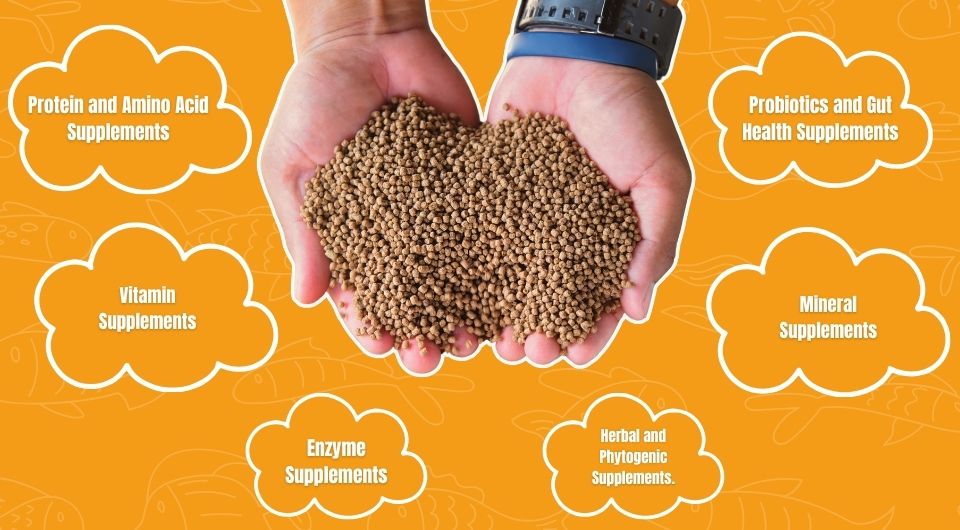
Protein and Amino Acid Supplements
The quality of protein is more important than the percent protein. Fish cannot live without specific essential amino acids and even when the basal feed formulation is adequate in protein, it may be inadequate in these essential amino acids, resulting in growth and feed efficiency reduction.
Lysine and methionine: These are typically the first limiting amino acids in plant based feed formulations and supplementation with these amino acids directly does improve growth rate and feed conversion in several species studied.
Hydrolyzed protein supplements: Pre-digested protein sources provide highly bioavailable amino acids, especially important in early life-stages when digestive systems are still developing.
Vitamin Supplements
There are several vitamins that must be given special consideration when formulating feeds for fish as deficiencies can have a major impact on fish growth, immunity and reproductive success:
- Vitamin C: Necessary for producing collagen, healing wounds, and supporting the immune system. However, unlike humans, most fish species are unable to produce vitamin C themselves, so it is essential to secure the vitamin C from their diet or supplements.
- Vitamin E: In conjunction with selenium, provides antioxidant protection, especially in intensive systems where oxidative stress may be greater.
- Vitamin D: aids calcium metabolism and skeletal health especially in recirculating systems where there is limited natural light.
- B-complex vitamins: Promote energy metabolism and metabolic efficiency at all growth stages.
Mineral Supplements
Minerals are involved in many physiological functions and base feed formulations often are deficient in a number of important ones:
Phosphorus: Essential for skeletal development and energy metabolism; excess supplementation of phosphorus may cause environmental issues in pond systems, so it is important to balance their feeding.
Calcium: Only used for skeletal health; many species can abstract some calcium from water, thus lessening the need for dietary calcium than other terrestrial animals.
Zinc and manganese: Enzymes and immune resilience, important in high density systems and systems with high stress.
Selenium: Acts as an antioxidant with vitamin E and supports the immune system.
Probiotics and Gut Health Supplements
Gut health is one of the most actively researched topics in aquaculture nutrition as the digestibility of feed directly influences the growth yield of fish.
- Probiotic strains (Bacillus, Lactobacillus): Maintain a healthy gut flora, enhance digestive function and inhibit harmful microorganisms.
- Probiotics: Boost healthy bacteria in the gut, promote a healthy digestive system and are especially helpful when changing feeds or during periods of stress.
- Synbiotics: These are a combination of probiotics and prebiotics, and some research has found these combinations to be more effective than using probiotics or prebiotics individually.
Enzyme Supplements
Exogenous enzymes are very useful for breaking down feed ingredients that would otherwise be less digestible by fish, especially as aquafeed is gradually changing to fish-free feed, with an increasing proportion of plant ingredients;
Phytase: It frees phosphorus that is bound to plant-based ingredients, making it more available and eliminating the necessity for using extra inorganic phosphorus.
Protease and amylase: enhance protein and carbohydrate digestion, especially beneficial for younger fish that have less developed production of digestive enzymes.
Herbal and Phytogenic Supplements.
Herbal feed additives have become a good option as natural alternatives to aid the immune system, digestive and stress resistance, which are free from synthetic antimicrobials:
- Garlic and allicin extracts: Immune function support and known to be antimicrobial and relevant to disease management.
- Turmeric and curcumin: Offer anti-inflammatory and antioxidant support, contributing to overall metabolic efficiency.
VarahVet’s aqua feed supplement range combines several of these into a single source of products that are tailored to the aquaculture species and not based on products that have been modified for use in livestock feed.
Determining what supplements to use in your operation.
So many categories of supplements are available that it is important to prioritize them based on a number of factors: known nutritional requirements of your particular species; what your basic feed formulation contains; the intensity of your production system; and the life stage that you are trying to feed. Instead of jumping into all the categories, bridging the biggest gap in your system, whether it is amino acid balance or gut health in the plant-based feed system, will usually yield more clearly defined results.
It is better to use a supplier who has specific knowledge of the nutrition needs of fish rather than using a brand name mix which is not known, or has an unknown nutrient profile, such as those found in aqua feed supplements that have been optimized for each species with documented nutritional requirements (e.g., VarahVet) which can be found in aquaculture feeds.
Conclusion
The most important thing to know when selecting the best feed supplements for fish farming is that they are nutritional supplements for fish, and not just for humans. The fish needs balanced amino acids, critical vitamins (such as vitamin C), critical minerals, good digestive health support, and, in recent years, herbal immune support (as an alternative to synthetic feed additives). Instead of blanket supplementation, targeting your operation’s dietary deficiencies and filling them with supplementary species-specific feeds developed by a trusted partner like Varah equip your operation with the best possible base for a predictable and reliable production outcome.
Frequently Asked Questions
Q: Do all fish species need the same feed supplements?
A: No, requirements vary according to species, life stage and production system. Formulations that work for tilapia may not be applicable to catfish or shrimp; it is important to formulate species-specifically.
Q: Is vitamin C supplementation really necessary for all fish feed?
A: Yes, typically. Most farmed fish species are unable to generate vitamin C from their own body, which means vitamin C is not a mere choice but a must-have nutrient to ensure optimal immune function and tissue health.
Q: Is it okay to use probiotics with enzyme supplements?
A: Absolutely, lots of aquaculture nutrition programs integrate these categories because they respond to complementary areas of digestive efficiency and frequently have synergic effects.
Q: Where do I start with supplements?
A: Usually, the most critical amino acid deficiency to address first is the one that is most evident after assessing the current amino acid balance of the feed used and the indicators of gut health, such as feed conversion ratio (FCR), so the first step is to assess these in consultation with an aquaculture nutritionist.