
Camels are generally said to be very resourceful, a species well adapted to survive in some of the most extreme, arid conditions on earth. True productivity – in milk yield, growth rate, or reproductive capacity – is on the table when “surviving” is all a camel farmer cares about and a natural resilience strategy is the only one pursued. Even in the best of conditions, the most adapted desert animal will benefit from some nutritional support, especially if it will be used for commercial milk, meat, or work and not allowed to live in the completely natural, non-demand conditions of the desert.
This guide examines the actual nutritional needs of camels in dry and arid climates where normal feed and forage are in short supply, and what categories of supplements are truly useful.
Camels are unique in facing challenges that require special attention for their nutrition.
Camels are adapted to the desert environment, have efficient water retention, can tolerate low quality fibrous food, and have the ability to burn off energy reserves in their hump when conditions are harsh. This efficiency does not imply that their nutrition is simple, or that they are able to obtain what they need from any vegetation in their vicinity.
In dry area countries, forage is frequently deficient in minerals, unpredictable from year to year and the fiber content makes it hard on the digestive system. In commercially reared camels, for dairy production, meat production or for working, this is the place where targeted supplementation is useful because it fills the gap between what the camel can obtain from the natural forage and what it requires for maximum productivity.
Water and Electrolyte Balance
Although camels are well-known for efficient consumption of water, the balance of electrolytes should not be overlooked, especially for working camels or lactating camels under greater physiological demand. Camels can also suffer electrolyte deficiency under prolonged heat stress and/or high work demand, and electrolyte supplementation helps to maintain normal hydration status and normal muscular and metabolic function.
Mineral Supplementation for Arid Forage Gaps
In the desert and semi-arid environments it is often found that forage is lacking in the following important minerals, which are required for long-term health and productivity in camels:
- Calcium and phosphorus: Necessary for bones and in lactating camels to maintain milk production. Forages from arid regions may be low in calcium, high in phosphorus, or have an unbalanced calcium:phosphorous ratio and targeted supplementation is especially relevant for these forages.
- Sodium and chloride: Basic salt supplementation supports normal physiological function and is especially important for camels grazing on low-sodium desert vegetation.
- Zinc and copper: Immune function and coat health, deficiencies more common in animals heavily dependent on desert plants which are low in nutrients.
- Selenium: Relevant in areas where soils are low in selenium, it is known to promote immune resistance and reproductive health.
Ideally a mineral supplementation program should consider the forage type, amount, availability, and nutritional make-up of an area because mineral content in desert forage will vary significantly by region and season.
The supplementing of vitamins in low-forage situations.
Camels may also be affected by a lack of some of the vitamins found naturally in fresh forage, when forage intake is low in these regions during prolonged dry seasons:
- Vitamin A: Of particular importance during periods of drought when dried, fibrous vegetation is a preferred food source for camels, the nutritional value of which has been significantly reduced.
- Vitamin E: Immune function and antioxidant defense, which are increasingly important at heat and nutritional stress times.
- B-complex vitamins: Energy metabolism, especially in working camels with increased energy requirements.
Energy and Protein Supplementation during Scarcity.
When forage is scarce, fat stores in the hump are an important source of energy for the camel, but this is not an economically tenable proposition for commercial productive animals. During long dry periods it is essential to provide energy-dense supplementary feed, along with sufficient protein for the animals to maintain their body condition, meet their production demands during lactation and for working animals, maintain their working capacity.
Protein supplementation is especially applicable to young, growing camels and lactating female camels which require higher than normal amounts of protein to satisfy their requirements.
Wellness and digestive health.
While the camel’s digestive system is well designed to efficiently digest fibrous, low quality forage, this does not mean that digestive support is not important; it can be especially important when moving between different feed sources or when changing feed in the middle of a season.
Probiotics: Maintain a healthy gut flora, especially helpful when switching feeds or when digestive strain is present.
Digestive enzyme support: During periods of prolonged dry weather, can support nutrients available from low quality forage which is often fibrous.
Supportive herbs and vitamins for heat stress.
Even in the very heat-adapted camel, chronic heat stress can impose a measurable strain on immunity and animal resilience. Based on the same principles applied to other livestock under similar heat and environmental stress, herbal and phytogenic supplements to boost immune function and reduce oxidative stress can be a natural way to help support camel health during the most challenging part of the season.
This is the general principle of VarahVet’s formulation of herbal veterinary feed supplements based on species-appropriate formulation for a variety of livestock exposed to different environmental stresses, rather than just on the animals’ natural adaptive mechanisms.
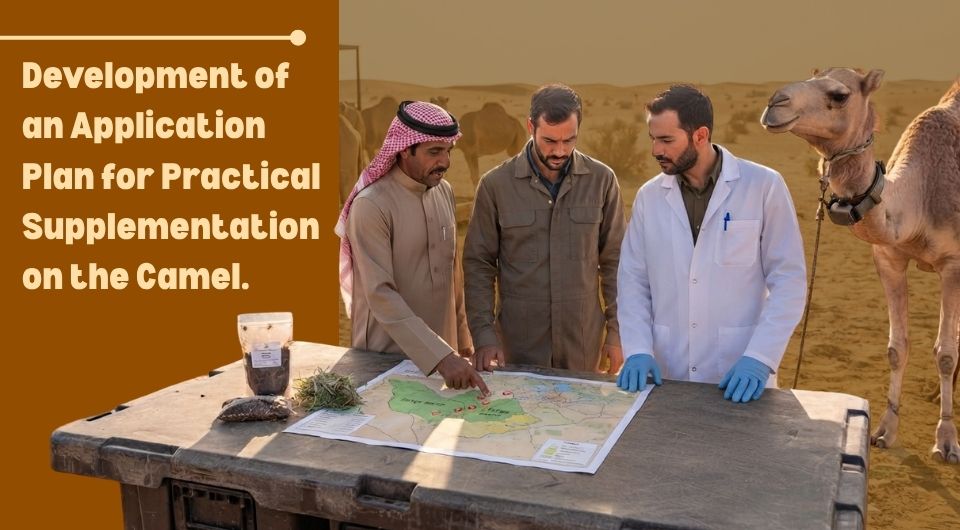
Development of an Application Plan for Practical Supplementation on the Camel.
Considering the diversity of camel farming conditions, ranging from nomadic pastoralists to commercial dairy farmers, a successful supplementation programme should, in the first place, be based on an understanding of the forage and mineral balance in the specific area where the camel is raised, and then focus on the most important deficiencies rather than on general supplementation. The use of a camel physiologic veterinarian or animal nutritionist, along with scientifically formulated supplements from a supplier who understands and is experienced with the local camel nutrition program, typically leads to more consistent and meaningful improvements than a generic approach or one-size-fits-all supplements for cattle or other livestock nutrition programs.
Conclusion
Although camels are known as survivors of the desert, they need to be managed properly in dry climates. All of these factors, taken together, create a comprehensive and holistic approach to supplementation that is truly effective. Farmers and veterinary supplement businesses who rely on camels need to select scientifically designed species specific products from a proven veterinary supplement partner such as VarahVet, instead of relying on natural adaptation alone to ensure commercially productive camel herds.
Frequently Asked Questions
Q: If camels are well adapted to survive in the desert, do they require supplements?
A: Survival and success are two distinct things. Camels are an extremely adaptive species, but commercially productive camels, especially those for their milk, meat or service, can be considerably more productive if they are supplemented specifically to achieve their productive potential.
Q: The most often ignored nutritional deficiency of camel diets is?
A: The problems of mineral imbalance are especially ignored because camels may look healthy even if they are problematically low on minerals, such as calcium/phosphorus related issues and micronutrients like zinc and selenium.
Q: What are the specifics of the impact of dry season forage shortages on camel nutrition?
A: In general, dry, fibrous forage is lower in vitamin A content, and has a reduced nutrient density, which is especially important in long dry seasons when supplementation with energy and vitamin A is relevant.
Q: Will lactating camels also benefit from supplementation or is it just for the working camel?
A: The lactating camel has one of the highest nutritional requirements in a camel herd due to the additional energy and mineral requirements for milk production and is one of the groups that can gain most from targeted supplementation.