
Nutrition is much more than just feeding livestock or poultry enough calories so they can survive. The proper proportions of minerals, vitamins, and macronutrients are vital for achieving maximum growth, strong bones, reproducing success, immunity, and productivity. Out of these nutrients, two of the most essential minerals as far as overall health in livestock is concerned are calcium and phosphorus, particularly in the developing livestock, such as poultry, birds, and small animals.
This paper will examine the essential nature of calcium and phosphorus for the health of animals, the interactions between the two elements in the body, the effects of deficiencies, and the benefits of a Calcium Phosphorus Supplement in maintaining the proper balance addressing peak performance and wellbeing.
The Essentiality of Minerals in Animal Diet
Inorganic elements, which animals need to get through the diet, are called minerals. Minerals do not give energy as compared to proteins or carbohydrates, but they are vital in:
- Structural development
- Cellular functions
- Hormone production
- Enzyme activation
- Electrolyte balance
- Muscle contraction
- Nerve function
The macro minerals that are in relatively large quantities and are also vital in most physiological processes include calcium and phosphorus.
Knowledge of Calcium: The Principle of Structural Integrity
2.1 What Is Calcium?
Calcium is the most widespread mineral in the body and is essential in:
- Bone and teeth formation
- Muscle contraction
- Blood clotting
- Enzyme activation
- Nerve transmission
- Hormone secretion
2.2 The role of Calcium in Bones and Skeletal Strength
Most of the calcium in the body is deposited in the skeletal framework where it offers rigidity and strength. With a lack of sufficient calcium, the bones are weak and prone to fractures, deformities as well as poor growth.
2.3 Muscle and Nerve Function
Calcium helps the muscles to contract well and makes the nerves transmit electrical impulses. A lack of calcium can lead to:
- Minimal or unproductive muscular contractions
- Poor coordination
- Impaired mobility
2.4 Calcium and Blood Health
Calcium also supports:
- Blood clotting
- Preserving the cell membranes
Lack of it may result in delayed recovery and vulnerability to bleeding issues.
Conceptualizing the Phosphorus: The Vitality Alliance of Calcium
3.1 What Is Phosphorus?
The second most common mineral within the body is phosphorus, which is present in all living cells. It plays a pivotal role in:
- Bone and teeth formation
- Energy metabolism (ATP)
- Cellular membrane structure
- Protein synthesis
- DNA and RNA formation
3.2 Phosphorus of Bones and Teeth
Similar to calcium, phosphorus is an element of the structure of bones and teeth. A combination of the two minerals results in a crystalline structure called hydroxyapatite, with which bones obtain their density and strength.
3.3 Energy Production and Metabolism
Phosphorus is also crucial to energy storage and release as it is also a major constituent of the ATP (adenosine triphosphate), which is the fuel of innumerable cellular processes.
3.4 Cellular and Tissue Functions
All cell membranes have phosphorus in the forms of phospholipids that regulate the incoming and outgoing of substances in the cell.
Calcium-Phosphorus Relationship: A Relationship Which Counts
There should be an adequate proportion of calcium and phosphorus to ensure the best health—especially in poultry and cattle, among other farm animals.
4.1 Ideal Ratio
The usual ratio of calcium to phosphorus that is advised in most livestock feed is 2:1 (third as much calcium to phosphorus). This ratio, however, may differ depending on species, age, and output (growth, laying, lactation).
4.2 Why Balance Is Critical
- Hypersupply of phosphorus may lower the levels of calcium and result in bones of lesser strength.
- The abundance of calcium can absorb phosphorus or other minerals, which reduces their bioavailability.
- The two minerals are balanced in building powerful skeletal systems; when the balance is disrupted, the synergy is compromised.
4.3 Hormonal Regulation
The absorption and storage of the two minerals are controlled by parathyroid hormone (PTH) and vitamin D. When these control mechanisms are not balanced, they may get strained, causing chronic metabolic complications.
Growth and Productivity: The Role Played by Calcium and Phosphorus
The skeletal development of young animals is affected by feeding practices and genetic factors.
5.1 Skeletal Development in Young Animals
The feeding habits and genetic factors influence the skeletal development of young animals. Calcium and phosphorus are required in sufficient amounts by young animals, particularly poultry, calves, or lambs, to stimulate their growth of bones. Deficiency can lead to:
- Rickets (soft bones)
- Angular limb deformities
- Weak joints
- Increased mortality
5.2 Egg Production in Poultry
Eggshells need a lot of calcium in order to be laid. The lack of calcium causes low quality of the shell, thin shell, and high breakage of eggs. Phosphorus promotes the general metabolism and energy needed to produce eggs.
5.3 Dairy Production in Dairy Animals
- Calcium plays a significant role in the secretion of milk because it is one of the key elements of milk.
- Phosphorus helps in the metabolism of energy that plays a vital role in lactation.
Indications and After-effects of Imbalance
6.1 Calcium Deficiency Symptoms
Calcium deficiency symptoms may be noticed in the patient and are often accompanied by heart complications and high blood pressure:
- Rickets in young animals
- Soft bones in adults (osteomalacia)
- Reduced growth rates
- Muscle twitching or tremors
- Weak egg shells in layers
- Poor fertility
6.2 Symptoms of Phosphorus Deficiency
Symptoms of phosphorus deficiency include:
- Poor appetite
- Reduced weight gain
- Weak bones
- Reduced fertility
- Lower milk production
- Bird abnormalities of the feathers
6.3 Combined Deficiency Issues
In case the two minerals are not present, the animals may suffer:
- Severe bone deformities
- Poor productivity
- Compromised immunity
- Greater vulnerability to illness
These imbalances are vital to the profitability of farms and animal welfare, which can be understood and prevented.
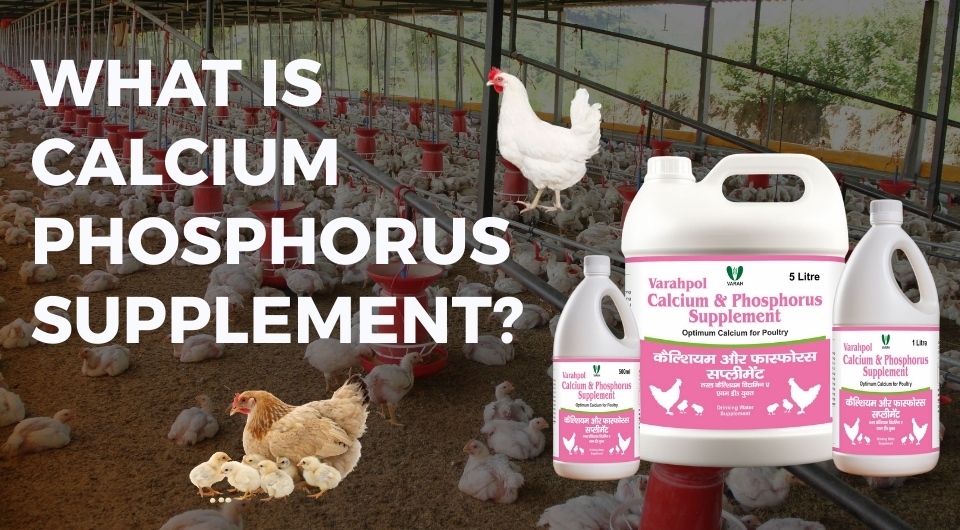
What Is Calcium Phosphorus Supplement?
A Calcium Phosphorus Supplement is a specially composed nutritional product that is meant to:
- Give the best quantities of calcium and phosphorus
- Correct imbalances
- Support bone health
- Improve productivity and development
- Enhance reproductive activity
- Monopolize preventive deficiency-related disorders
Such supplements come in particularly handy when:
- Animals have great nutritional requirements (development, lactation, hatching).
- Minerals have not been provided enough in the dietary feed.
- There is high growth in poultry or livestock.
- Nutrient absorption is influenced by environmental factors.
The Way Calcium Phosphorus Supplements Are Going to Enhance Animal Health
8.1 Strengthening Skeletal Systems
Supplementation helps to make growing animals strong in bones, thus preventing the possibility of fractures, deformities, and lameness.
8.2 Boosting Productivity
- On layers: more eggshells and more eggs.
- In dairy animals: quality milk and increased yield.
- In meat animals: optimum growth rates.
8.3 Improvement of Reproductive Performance
The two minerals are essential in reproduction processes, fertility, and healthy young ones.
8.4 Metabolism Supporting Efficiency
Adequate phosphorus and calcium enhance:
- Nutrient metabolism
- Energy utilization
- Excited activity of the enzyme in digestion
Supplementary Calcium and Phosphorus Best Practice
9.1 Formulating Balanced Diets
Supplementation should be done after ensuring that the base feed meets the nutritional requirements.
9.2 Feed Testing
Feed analysis assists in determining nutrient shortages and developing accurate supplementary strategies.
9.3 Stage-Specific Nutrition
Farmers require robust skeletal formation. More calcium is required in eggshells. Animals that lactate need supplementary minerals.
9.4 Prevention of Excess Supplementation
Excessive supplementation may cause mineral antagonism and undesired health effects. It has to be properly formulated and vetted.
The supplements may be administered in different forms:
- Powder mixed with feed
- Pellets
- Liquid or syrup
- Premix blends
The choice depends on:
- Species
- Age
- Feeding strategy
- Farm management practices
Administrative consistency will mean that animals get uniform nutritional support.
Nutrition of Poultry Calcium and Phosphorus
Poultry production requires special needs because:
- Rapid growth rates
- Egg production needs
- High metabolic turnover
11.1 Broilers
Broilers need equal amounts of minerals to stimulate muscle and skeletal growth. The imbalances may cause leg disorders and death.
11.2 Layers
Great calcium is necessary to form shells. Phosphorus promotes metabolism and energy. Calcium Phosphorus Supplement makes the eggs strong and healthy.
11.3 Breeders
Mineral supplements increase fertility and hatchability.
Ruminant (Cattle & Buffalo) Calcium and Phosphorus
12.1 Role in Bone Health
Minerals help ruminants to form immunity, bone, and metabolic functions.
12.2 Milk Production
- Calcium is important in the formation of milk.
- Phosphorus is an important component of energy metabolism.
12.3 Avoiding Milk Fever
The proper balance of calcium prevents milk fever, especially during calving
Analysis paused
Here is the clean continuation, keeping all original wording, proper headings, and no special sign — used.
Mineral Nutrition Emerging Research
The innovations in mineral supplementation reveal:
- Further uptake using chelation technology
- Enhanced bioavailability by nano mineral forms
- Synergism is coupled with vitamin D3 to increase uptake
Keeping abreast of new research would make good health outcomes.
Difficulties in Mineral Supplementation
14.1 Nutrient Interactions
The absorption of minerals is competition; it is important to know the interactions.
14.2 Cost vs. Benefit
Productivity is enhanced by effective supplementation and investments are worthwhile.
14.3 Quality Control
Quality of supplements affects the effectiveness if purity and manufacturing standards are relevant.
Field Tests and Field outcomes
One of the most successful farms are usually said to be:
- Improved growth rates
- Better egg quality
- Reduced skeletal issues
- Improved reproductive functioning
- Improved overall health
Evidence based practice bears similar outcomes.
Conclusion
Animal life is based on calcium and phosphorus, which are not only necessary in structural integrity but also in metabolic activity, reproductive fitness, immune strength, and productivity. Calcium Phosphorus Supplement is a properly designed nutritional supplement that guarantees livestock and poultry’s adequate mineral nutrition without the numerous effects of deficiency.
Through the incorporation of mineral supplementation with a holistic approach to nutrition, consisting of balanced feed, frequent testing, and veterinary supervision, farmers will be able to achieve improved flocks and herds, increased farm productivity and economic outcomes in the long run.
The first step to animal health empowerment is to comprehend the importance of such nutrients as calcium and phosphorus and do what is within their power to help them.