
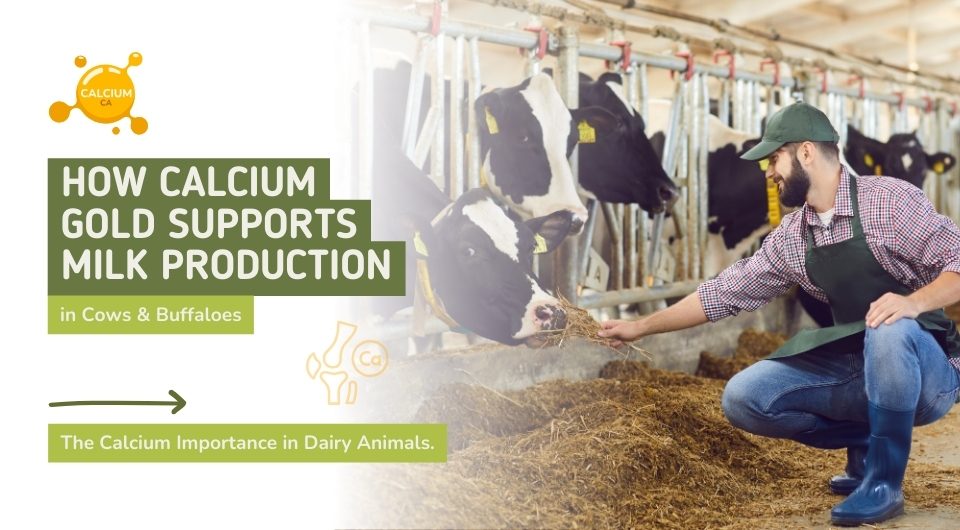
The basis of profitability in dairy farming is the milk production. It is either cows or buffaloes but the choice is always the consistency of milk production, quality milk and healthy animals which is the concern of every dairy farmer. Caesalpinia spinosa is however one of the most prevalent and rarely considered nutritional deficiencies in dairy animals. Calcium is a very important element to the milk production besides being important in keeping the bones strong, muscles active, transmitting nerve signals, and the general metabolic well being.
The calcium demand of cows and buffaloes rises when they are in high milk-yielding periods, when pregnant and right after calving. Unless this requirement is fulfilled by diet alone, it may cause low milk production, weak pigmented animals, metabolic abnormalities and permanent loss of productivity.
It is in this context that a Calcium Gold Supplement is a significant addition to the contemporary dairy diet. This paper will discuss how Calcium Gold can enhance milk production in cows and buffaloes, why calcium is so essential, when to supplement them, and why it makes them healthier and more productive dairy animals.
The Calcium Importance in Dairy Animals.
The Uses of Calcium in the Animal Body.
Calcium is among the most valuable minerals in dairy animals. Almost all the calcium (99 percent) is deposited in bones and teeth, and the remaining 1 percent of calcium has critical functions in:
- Muscle contraction
- Nerve signal transmission
- Blood clotting
- Enzyme activation
- Milk secretion
The absence of sufficient calcium disrupts such processes, which have a direct influence on the milk production and on the health of the animals.
Calcium Need in the production of milk.
During Lactation Demand is increased.
Calcium is very high in milk. Each liter of milk that is generated eliminates calcium in the body of the animal. This loss grows very quickly during peak lactation.
In case the intake of calcium in the diet falls short of this requirement:
- Milk yield declines
- The calcium stores in the body are lost.
- Risk of milk fever increases
This balance is maintainable with the help of a Calcium Gold Supplement.
Comprehending the meaning of a calcium gold supplement?
Calcium Gold Supplement is a specially prepared mineral supplement that must offer easily absorbable calcium and supportive nutrients to increase the effectiveness of calcium using the body.
Calcium Gold Supplements: Major Characteristics.
- High bioavailability
- Fast absorption
- Promotes the health of bones and milk.
- Appropriate to cows and buffaloes.
They come in handy especially at times of high stress in physiological activities.
The way that Calcium Gold Provides Support to the production of milk.
Preventive in Calcium Deficiency in Lactation.
Calcium Gold Supplement provides calcium in the body of the animal to maintain constant availability to meet the high demand during the milk production.
This leads to:
- Stable milk yield
- Reduced post-calving stress
- Better metabolic balance
Reduces Risk of Milk Fever
Hypocalcemia or milk fever is a frequent dairy cow and buffalo postcalving disease. It may have serious consequences on the production of milk and survival of animals.
Frequent calcium supplementation:
- Decreases cases of milk fever.
- Aids in good recovery of calving.
- Enhances postpartum lactation.
Helps Muscle and Udder Performance.
Calcium is required in muscle contraction which includes:
- Smooth milking reflex
- Proper teat muscle function
- Efficient milk let-down
Sufficient calcium means that there is no interference in the extraction of the milk during milking.
Calcium Gold in the manufacture of Buffalo Milk.
Buffaloes are more fat and mineral-rich milk, which is a means of augmenting their calcium requirement.
Calcium Gold Supplement assists buffaloes by:
- Endorsing production of fat-enriched milk.
- Having good skeleton structure.
- Lessening the complications in calving.
Impact on Milk Quality
Enhances Consistency and Stability of Milk.
Mineral balanced nutrition helps in:
- Better milk composition
- Better quality of processing.
- Enhanced shelf life
Sustains Milk Fat and SNF Levels.
Even though calcium does not directly raise fat, it supports metabolism processes that affect:
- Milk solids-not-fat (SNF)
- Overall milk density
Calcium Gold Supplement Advantages to Dairy Farmers.
Improved Productivity
- Higher milk yield
- Fewer production drops
- Healthier animals
Reduced Veterinary Costs
- Reduced metabolic disorders.
- Less emergency treatment.
Improved Reproductive Performance.
- Increased post-calving recovery.
- Enhanced heat cycle and fertility.
Meaning in the various life stages.
During Pregnancy
- Aids in the formation of the fetus bones.
- Babysits the animal to lactate.
Post-Calving
- Prevents calcium crash
- Promotes the early production of milk.
Peak Lactation
- User-friendly to maintain a steady milk production.
- Avoids chronic malnutrition.
Symptoms that are Indicative of Calcium Deficiency.
Farmers should watch for:
- Sudden drop in milk yield
- Poor or impaired standing.
- Reduced appetite
- Slow recovery after calving
Serious complications can be avoided by early supplementation.
California State Veterinary Calcium Supplementation.
Calcium supplementation is highly suggested by veterinarians due to:
- The sources of natural feed are not always sufficient.
- There is an impact of soil mineral depletion on fodder.
- Animals with high levels of yield require more minerals.
Calcium Gold Supplement can be implemented in preventive nutrition programs.
The Rationale of Quality in Calcium Supplements.
Calcium supplements do not produce equal results. Effectiveness depends on:
- Purity of raw materials
- Absorption rate
- Balanced formulation
- Manufacturing standards
The manufacturers are established, have high levels of R&D, high production volumes and have strict quality control, thus guaranteeing consistency in performance and safety of the animals.
Calcium and Supplementation and Bone Health.
Long-term productivity depends on strong bones.
Calcium Gold Supplement promotes:
- Bone density
- Joint strength
- Reduced lameness risk
This is particularly necessary to high-producing and aging animals.
Role in Long-Term Herd Health
Regular consumption of calcium results in:
- Longer productive lifespan
- Fewer metabolic issues
- Improved herd uniformity
A healthy animal implies a consistent income of farmers.
Sustainable Dairy farming and mineral nutrition.
Balanced mineral supplementation helps in supporting:
- Efficient nutrient use
- Reduced feed wastage
- Healthier animals
This is in line with the sustainable and responsible livestock management practices.
Widespread Misconceptions on Calcium Supplements.
Myth 1: Calcium Is Only Required after Calving.
During pregnancy and lactation calcium is needed.
Myth 2: Green Fodder Is Sufficient in Calcium.
The contemporary fodder does not contain sufficient minerals because the soils are depleted.
Myth 3: Too Much Calcium Is Not Good.
Correctly designed supplements are safe in terms of minerals.
Best Practices on the use of Calcium Gold Supplement.
- Follow recommended dosage
- utilize at times of peak demand.
- Blend with equal proportion.
- Keep track of milk production and disease.
It should be consistent to achieve the best results.
Prospects of Dairy Mineral Nutrition.
Due to the increased intensive dairy farming, the use of precision mineral supplementation will significantly contribute to:
- Maximizing milk production
- Improving animal welfare
- Reducing losses
Supplementation with calcium will also be a staple of dairy diets.
Conclusion
Calcium has been a key mineral which directly affects milk production, the health of animals, and profitability of the farm. A Calcium Gold Supplement assists cows and buffaloes in satisfying their higher calcium needs during pregnancy, calving and lactation. It contributes to sustainable dairy farming by averting deficiencies, promoting the flow of milk, enhancing recovery, and ensuring bone strength.
As a veterinarian, dairy owner, cattle farmer, and animal lover, calcium supplementation is not a choice but rather a mandatory condition to a regular production of milk and the overall health of the herd in the long-term perspective.