Optimum Revitalization of Kidney


VarahVet
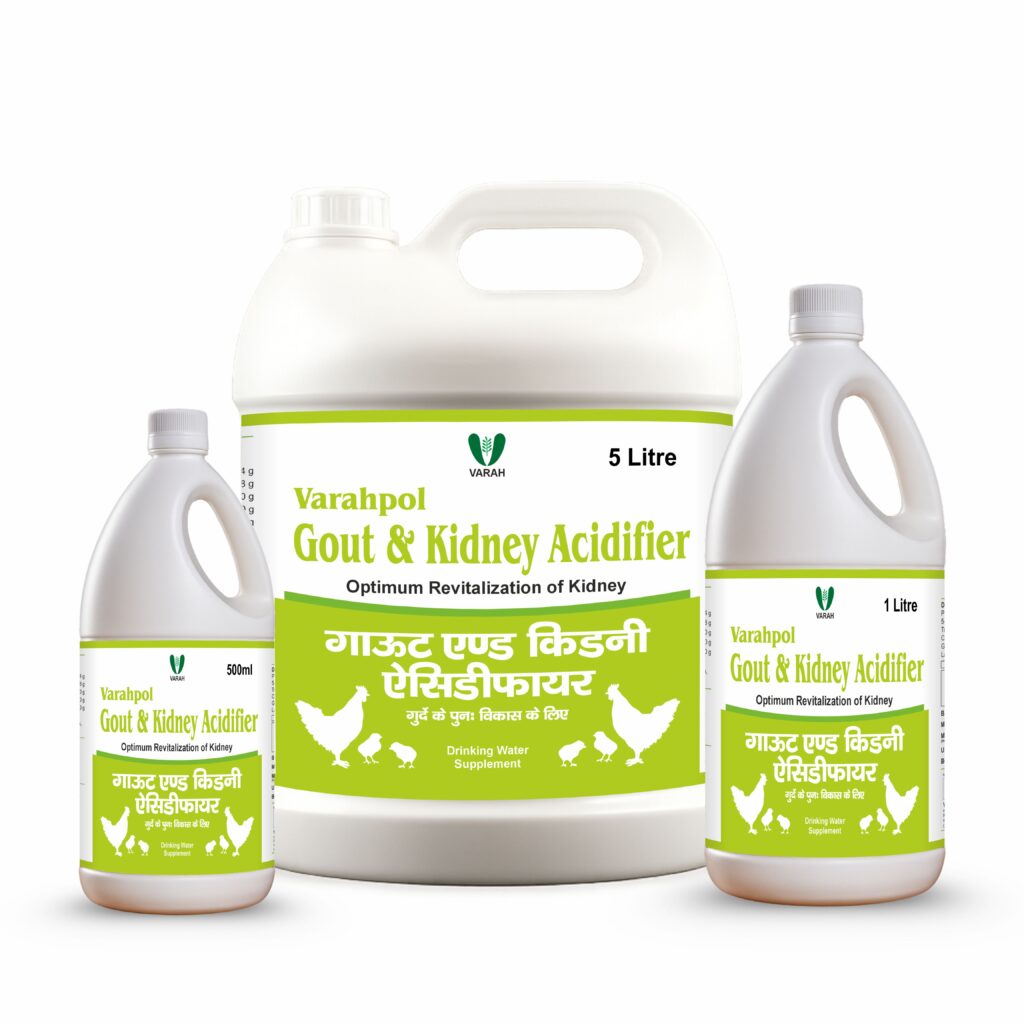
Varahpol Gout & Kidney Acidifier
VarahVet
Varahpol Gout & Kidney Acidifier
Why Gout & Kidney Acidifier?
Renal Diseases are of common occurrence in Avians. The significant causes include dehydration, hypovitaminosis A, excessive dietary vitamin D3 or calcium (greater than 3% in non-laying hens) & protein, heavy metal toxicity, bacterial nephritis secondary to systemic disease . One of the important differentials for primary renal disease in Urolithiasis & gout, In gout, there is hyperuricemia (increase in uric acid content in blood) excess uric acids start depositing on serosal surfaces of the pericardium, liver capsule, air sacs and within the kidney but may be found on any tissue (visceral Gout) or on articular surfaces (in or around joints). Articular gout lesions are particularly common on the foot and hock. Clinical signs of articular gout may include reluctance to mave, shifting from leg to leg, lameness and joint swelling. Urolith development is most commonly associated with severe dehydration; other factors may include excess dietary calcium, Dietary Electrolyte Imbalances, infectious bronchitis virus, Mycoplasma synoviae infection, mycotoxicosis, or shipping stress. Excess dietary protein has also been correlated with increased production of uric acid, but even with very high levels of dietary protein (ie, 80%) gout develops only in genetically susceptible individuals. Nevertheless, it is still theorized that long-term & high-protein feeding may induce hyperuricemia in granivorous or nectivorous birds.
Composition :
Per litre contains: Vitamin A 3.14 g, Sodium Chloride 8 g, Sodium Citrate 30 g, Ammonium Chloride 10 g, Potassium Chloride 30 g, Sorbitol (as excipient), contains preservative (Sodium Methyl Paraben, Sodium Propyl Paraben).
Advantages
- To prevent & treat Gout.
- To prevent & treat ascites.
- To prevent & treat urolithiasis.
- Revitalization of kidney functioning
Dosage :
Prevention :
5-10 ml/100 birds for 3 weeks
Treatment :
Chicks : 15 ml/100 birds/day
Growers/Finishers 20 ml/100 birds/day
Layers/Breeders 30 ml/100 birds/day