
Growth rate is not only a performance indicator in any commercial operation, it is the indicator that will determine how quickly you will get to market size, how much your operation will cost, and therefore how profitable your operation will be. However, a lot of farms looking for a “fish growth supplement” are left disillusioned after having tried one product since “fast fish growth” rarely has one single solution. This is what comes from a proper diagnosis of your existing system’s problem areas.
This guide presents practical, scientific factors that really contribute to better fish growth in aquaculture, and how to consider supplementing as a tool within a larger toolbox.
The Multi-Faceted Nature of Fish Growth Problems
If you’re not seeing the growth you’d like, you might want to pinpoint a problem almost immediately, typically it would be feed quality. Actually, fish growth is the result of a number of interdependent systems such as water quality, feed composition, gut health, stocking density and genetics that all contribute to the efficiency with which a fish converts feed into body mass. A fish growth supplement can make a difference in the outcome, but after the more basic factors of growth limitation have been determined and corrected.
Start With Water Quality, Not Just Feed
Prior to investing in any supplement it is wise to ensure that the water quality is not the limiting factor. Poor water quality, whether caused by high ammonia, low dissolved oxygen, or fluctuations in temperature and pH, is a chronic stress that affects fish performance, no matter how well their feed is formulated. The energy used for metabolism and growth is reduced to cope with stress and even the best fish growth supplement will have little effect in adverse water conditions.
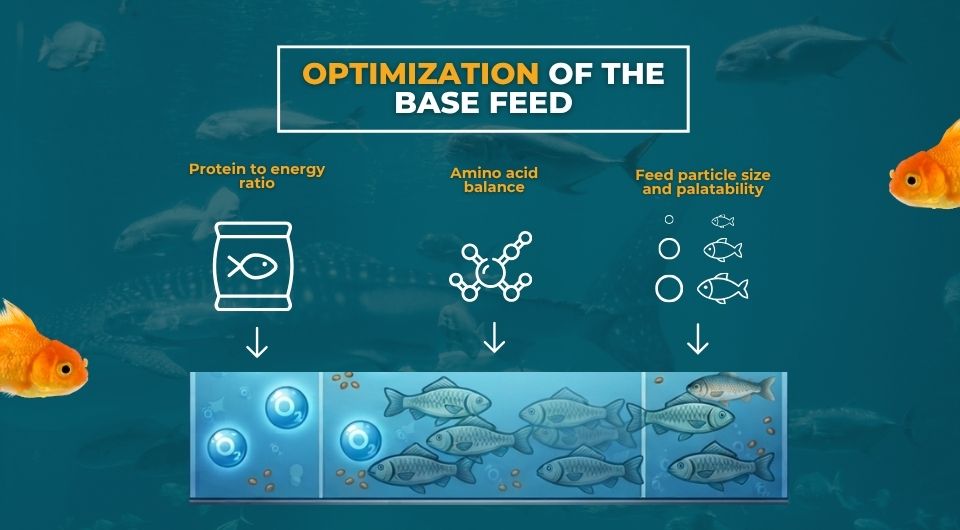
Optimization of the Base Feed.
If water quality is determined to be satisfactory, it is time to focus attention on the next critical process, feed formulation:
- Protein to energy ratio: Fish require adequate food energy to allow for protein synthesis for growth instead of just maintenance. This is one of the most common and most overlooked causes of poor growth, with an imbalanced ratio.
- Amino acid balance: Lysine, methionine and threonine are commonly the deficient amino acids in plant based aquafeed. If they fail to do so, growth is not stimulated even if the total protein is sufficient.
- Feed particle size and palatability: Poorly sized feed for a given life stage can reduce intake, directly limiting growth regardless of nutritional completeness.
Talk about Gut Health as a Growth Driver.
Good feed to good growth is achieved by a well-functioning gut. Digestive inefficiency under any circumstances affects nutrition, regardless of the diet’s nutritional value. Here, a targeted fish growth supplement based on gut health typically shows some of the most quantifiable, stable results:
- Probiotics (Bacillus, Lactobacillus species): Promote positive gut microbiome, help optimize digestive function, competitively displace pathogens, and some research shows measurable benefits to growth and/or survival with supplementation.
- Prebiotics and synbiotics: Provide substrate for beneficial gut bacteria; they tend to give greater and more consistent improvements in growth when used with probiotics.
- Digestive enzymes: Fish are given digestives – Phytase, protease and amylase – to help them utilize the nutritional value of plant-based feed ingredients that they would otherwise not digest as well.
Correct Micronutrient Gaps
Vitamin and mineral deficiencies can cause growth to be stunted without obvious protein and energy deficiencies:
- Vitamin C: Plays a key role in collagen production and helps with tissue repair, which relates to steady growth, and is important because fish do not produce vitamin C themselves as many other animals do.
- Vitamin E & selenium: Promote antioxidant defense to decrease the energy cost of dealing with oxidative stress.
- Phosphorus, calcium, zinc and manganese: Promote skeletal development and enzyme activity of important growth pathways.
Consider Herbal and Phytogenic Growth Support
Herbal supplements, as an indirect growth support category, is rapidly gaining importance because of the decreasing use of synthetic growth promoters in the industry:
- Garlic and allicin extracts: Promote immune health and minimize disease pressure which would otherwise detract from growth.
- Turmeric and curcumin: Provide anti-inflammatory and antioxidant benefits, which support overall metabolic function.
VarahVet’s aqua growth supplement range is designed around this unique gut health and immune-support supplement approach that targets the digestive and physiological aspects of the fish that most directly contribute to growth rather than a generic ‘one size fits all’ additive.
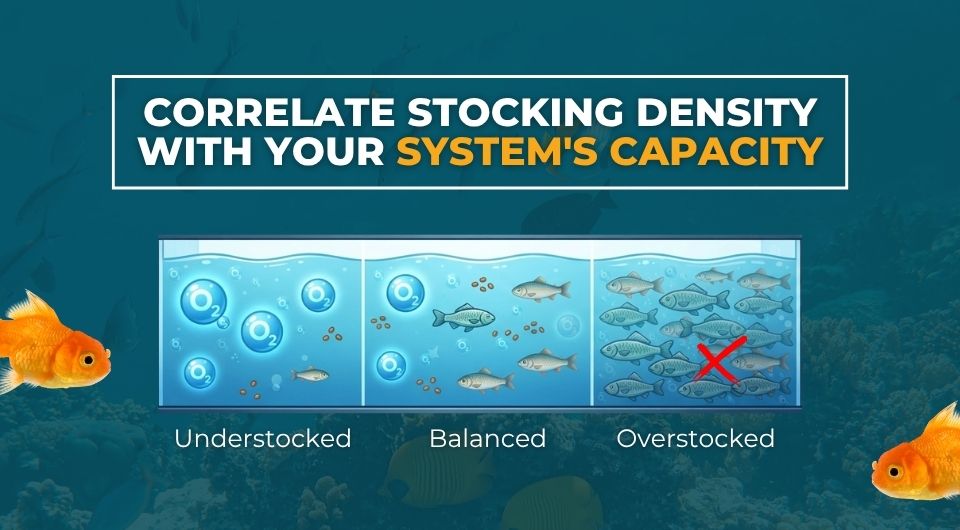
Correlate Stocking Density with Your System’s Capacity
One of the most common and underestimated causes of disappointing growth results despite the provision of good feed and supplementation is overstocking. If feed and oxygen are limited, it can result in more competition for feed and oxygen, higher stress hormone levels and even growth inhibition despite a well-designed nutrition programme. It’s essential to evaluate stocking density in relation to the carrying capacity of your system before supplementation can have the desired effect.
Establishing a Plan for Practical Growth Improvement
A first step to consider is to conduct a structured review: make sure that water quality is acceptable; review the protein-energy balance and amino acid profile of the base feed; compare stocking density to the system capacity; and then introduce specific supplementation, either gut health, micronutrient, or herbal, based on what you have determined is missing.
Collaborating with a supplier that has a specific focus on aquaculture nutrition, like VarahVet, which creates scientifically proven aqua growth supplements based on species and system specific needs, can yield far more predictable and measurable results than a generic supplement with no regard to what they might be lacking.
Conclusion
When it comes to fish growth in aquaculture, it is seldom about the one perfect supplement. It takes a methodical approach, starting with a water quality check, followed by an optimised base feed formulation, gut health management, filling those micronutrient deficiencies, and then incorporating targeted supplementation to close those remaining deficiencies. As part of this approach, your operation can benefit from the best possible foundation for consistent, measured growth improvement with scientifically formulated aqua growth supplements from an experienced partner such as Varah.
Frequently Asked Questions
Q: What’s the fastest way to identify what’s limiting my fish’s growth?
A: First do some water quality testing and review the protein to energy ratio and amino acid balance of your feed as these are the most frequent causes of most issues, before adding supplements.
Q: How long does it take to see results from a fish growth supplement?
A: If all other limiting factors (water quality etc.) have been resolved, then the growth rate and feed conversion benefit of most of the supplements that focus on gut health and amino acids can be measured within 4-8 weeks of regular use.
Q: Is there a significant difference in the growth of fish when fed just herbal supplements?
A: Herbal supplements mainly help to maintain the immune system and minimize growth delays due to the disease, but they do not contain any limiting nutrients. Ideally, they complement, rather than replace, core nutritional and gut health supplements.
Q: Is it really that important how many are overstocked compared to feed quality?
A: Yes. Stocking density should be reviewed as part of any growth improvement plan since overstocking can cause a reduction in growth due to stress and competition for feed and supplements, even when the feed and supplements are excellent.