

When supplementation becomes a topic on the farm, the cost is the initial question most poultry farmers ask. There’s a reasonable question to ask. Feed is already the largest single cost in the poultry enterprise and it will be obvious to the farmer that to add another line item must have more than health appeal, it must make good financial sense. How much does it cost to supplement the diet of poultry, and does it make money?
The article examines the actual cost considerations when supplementing poultry diets, the factors which affect the pricing of these products, and considers the return on the investment (or cost) in these products rather than just the cost alone.
What Determines the Cost of Poultry Feed Supplements
The price for supplements varies, and is determined by a number of factors that determine how much you are paying per bird or batch:
- Price of supplement: Basic vitamin-mineral premixes are usually the cheapest, whereas more specialized formulations of herbs, probiotics or immune support supplements are usually more expensive because of the complexity of sourcing and formulation.
- Form of the product: Powder and liquid supplements are priced differently depending on concentration, ease of mixing, and shelf stability, with liquid formulations sometimes carrying a premium for faster, more uniform absorption.
- Dosage and inclusion rate: The amount of supplement needed per kg of feed or per bird will impact per bird cost, and will differ considerably between different types of supplements.
- Flock size: The higher the number of birds in a flock, the better the per-bird price will be, because the smaller the flock, the slightly higher the per-bird price will be because of bulk pricing.
- Cost of production: Starter, grower and finisher stage supplements may have different costs as they may have different nutritional requirements and rates of inclusion throughout the production stage.
Typical cost ranges for common types of supplements.
The price range for most supplements varies depending on the supplier, region and quality of the product, but it’s important to know the general price range for each category of supplement:
- General vitamin-mineral premixes: These are typically the lowest cost, and are used for general nutrient deficiency.
- Gut health and probiotics: slightly more expensive because of the special strains and stabilization processes used, but can be worth it because of better feed conversion.
- Herbal growth and immunity boosters: These have more complex extraction and formulation processes, which is reflected in the mid to higher price range.
- Specialized life stage products: These products are more expensive because they are formulated for specific life stages, or for stress, or in case of illness, but only for limited periods of time.
It would be a whole lot more valuable to look at the cost per bird per day or cost per production cycle, rather than being stuck on the sticker price alone, and having it placed in the proper context with your overall feed budget.
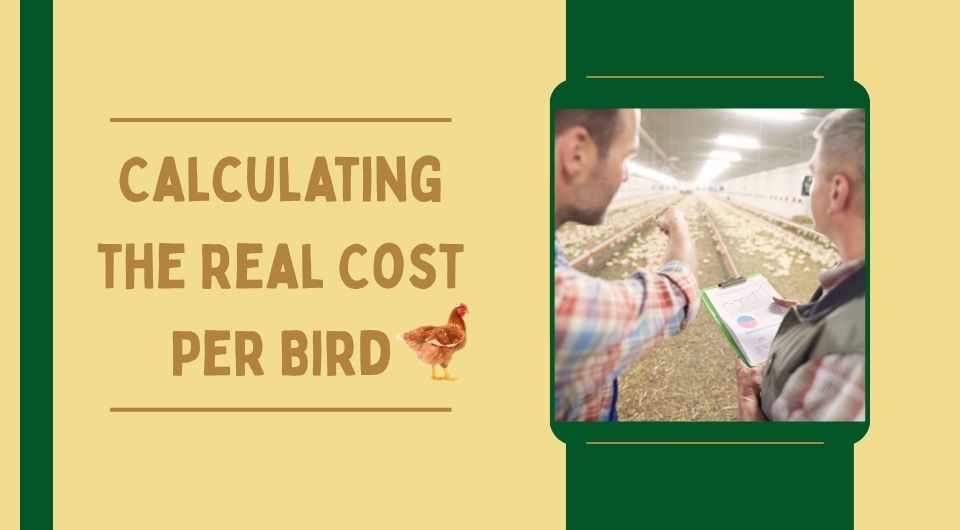
Calculating the Real Cost Per Bird
One way to consider the cost of supplements is the number of dollars per bird/day instead of the dollars per package. These products are generally applied at low levels in feed and the cost per bird is a small proportion of total feed cost for most of the standard vitamin-mineral or gut health supplements.
To determine the exact quantity you need to add, you need to know the recommended inclusion rate of the supplement (typically in grams per kg of feed and/or litres per water usage), the amount of feed or water your flock consumes each day, and the price of the supplement in kg or litres. You get a realistic cost per day per bird by multiplying these together, the answer is usually a lot less than what the farmer would have guessed before working out the figures.
Weighing Cost Against Return on Investment
It’s not simply a matter of “how much does this cost,” it’s also “what is this costing me in relation to what will I gain back.” In most situations, supplementation will pay off in a few measurable ways:
- Better feed conversion ratio (FCR): Feed is the highest recurring cost in poultry farming and a small improvement in FCR can more than make up for the cost of supplements.
- Lower mortality rates: Direct protection of revenue per batch from lowered losses due to disease or poor immunity.
- Target weight achieved faster and more consistently: This will reduce the production time and maximise overall production throughput.
- Lower vet and treatment expenses: If the base immunity is high due to regular supplementation, the need for reactive vet and/or treatment is diminished and/or less costly.
Most of the time, the additional costs associated with measuring these metrics before and after a farm implements a supplement program are easily justified by the money saved as it becomes cost-effective in just one production cycle, or sometimes many.

How to avoid overspending on supplements?
Not all supplement investments provide the same level of return, and a few common mistakes can unknowingly increase expenses without increasing returns:
- Don’t layered products: If two or more products contain the same nutrient, buy only one. Read labels to make sure you don’t repeat information.
- Avoid arbitrary feeding: It is all too easy to “supplement” without any particular nutrient or production problem in mind, and that results in unnecessary feed costs.
- Opt for quality rather than the cheapest: A product with a low concentration that’s not much formulated could prove to be cheaper in the beginning but less effective or require larger doses, thus being more expensive per actual benefit.
- Purchase at the correct scale: For larger operations, making regular bulk purchases may be too costly when compared to purchasing at one time from a reliable source like VarahVet that provides scientifically formulated poultry supplements throughout various stages of production.
Conclusion
When considering the additional cost on a per bird per day basis, supplements of poultry feed are relatively small, and usually very cost-effective with the additional cost covered many times over by improved feed conversion, reduced mortality and better overall flock performance. Farmers should not think of the cost of the supplement in isolation, but compare their flock’s performance before and after supplementation, and know the quality of the product being used, for example one based on a high quality ingredient source, which, like those from Varah, has been specifically formulated for their farm’s needs and production stage.
Frequently Asked Questions
Q: How much does it cost to supplement a small backyard flock?
A: Inclusion rates depend on flock size so even small flocks can benefit. The cost of each bird is relatively the same for all sizes, though larger operations might be able to get better bulk pricing.
Q: How can I estimate the return on investment before committing to a supplement program?
A: Measure FCR, mortality rates and uniformity of growth before supplementation, and after a complete production cycle, to observe the difference in the measurable factors.
Q: Which is more economical, liquid or powder supplements?
A: Well, it depends on your setup. In general, powdered supplements added to feed can be slightly more cost effective for larger quantities, while liquid supplements can be used to provide more accurate and uniform feeding, especially in times of stress or recovery from disease.
Q: Is it possible to save on supplement costs by only adding them at critical times, rather than on a regular basis?
A: Yes, many farmers supplement continuously with a “baseline” formula that is sufficient in general, and then switch to more specialized, more expensive formulas for specific periods of time when the need is greatest, such as brooding, when there is a risk of disease, or when temperatures are high.